Sunday, February 10, 2013

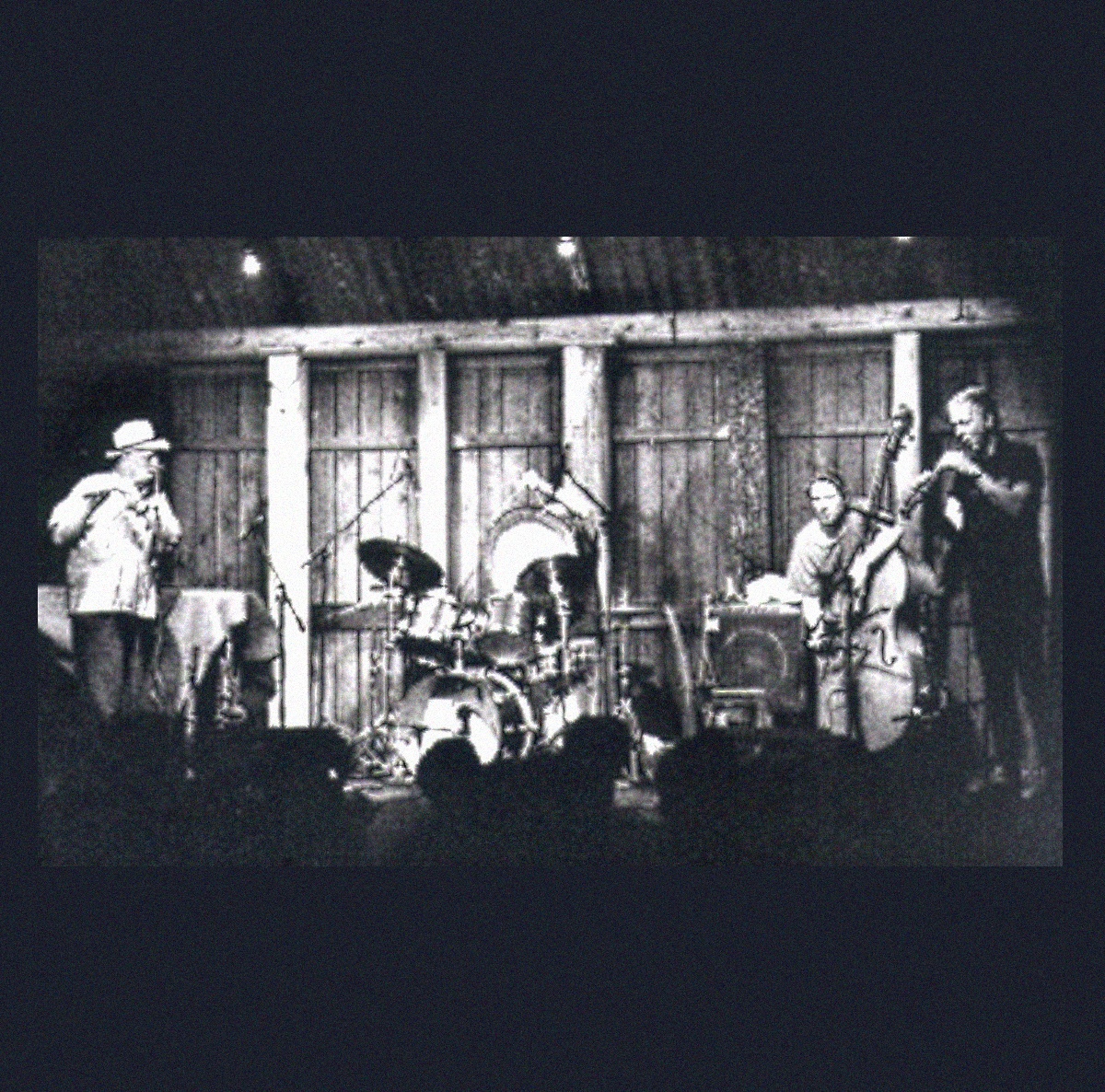
FRODE GJERSTAD / NICK STEPHENS / PAUL HESSION – Live At The Termite Club (2003)


Label: Loose Torque – LT 009
Format: CD, Album; Country: UK - Released: 2003
Style: Free Improvisation
Recorded live at the Termite Club, Leeds 2003
Artwork – Fay Stephens

Description : Recorded live at the Termite Club in Leeds in September of 2003 and featuring Frode Gjerstad on clarinets and alto sax, Nick Stephens on bass and Paul Hession on drums. Finland's finest free sax player, Frode Gjerstad, never seems to rest as he can be found on 40+ discs from a half dozen different labels. His long-term relationship with John Stevens & Johnny Dyani in Detail and 3 discs with Derek Bailey, remain amongst his most visible successes. He chooses to work with the best players from around the world: Bobby Bradford, Borah Bergman, Peter Brotzmann, Paal Nilssen-Love, William Parker & Hamid Drake, to name a few.
Here with matches wits with some of the UK's best, Nick Stephens on acoustic bass and Paul Hession on drums. Consisting of two long pieces (25 1/2 & 37 minutes) and one shorter piece and well-recorded as are all of Nick Stephens' superb Loose Torque releases. "Meeting at the Adelphi" begins quietly with Frode playing a great deal of eerie clarinet as Nick bows expressively, the piece is filled with suspense. Paul Hession, also takes his time and delicately knits with his equally subtle drumming. Nick's immense bass is again at the center of the storm as it builds through intense sections. This mighty trio obviously mean business as they take us all for wonderful ride up and down the mountains and valleys, there is no turning back as soar to the stratosphere and beyond. - BLG

Note:

FRODE GJERSTAD is one of the few Norwegian musicians playing modern improvised music outside the 'ECM-school'. He has chosen to play with foreign musicians because there is no tradition in Norway for free improvised music.

His relationship with John Stevens which started in 1981 and lasted up until Stevens' death in 1994 was of great importance both musically as well as on a personal level. Through Stevens, he became acquainted with the playing of some of the finest British improvisers. His longstanding group with Stevens, 'Detail', started as a trio in 1981 with keyboardist Eivin One Pedersen, though Johnny Mbizo Dyani came in on bass in 1982 and Pedersen left later that year. The group played mainly as a trio until Dyani's death in 1986, though they did invite occasional guests to fill out the lineup; they undertook a tour of Britain in 1986 as a quartet with Bobby Bradford on cornet. Bradford did another tour with Detail with Paul Rogers on bass and then one with Kent Carter on bass; a quartet tour of Norway was organised with Billy Bang in 1989. The group then continued as a trio with Carter till 1994 when Stevens died.

Frode Gjerstad has also been active, running a group of very young Norwegian musicians, Circulasione Totale Orchestra, where he is dealing with electric instruments and modern rock- oriented rhythms. He has used the band to present his own compositions as well as a workshop and place for young people to get to know free improvisation. The band presented a commissioned work at the Molde Festival in 1989 with a 13 man band combining free improvisastions, compositions as well as rapping and scratching (three horns, three bassists, three drummers, accordion, guitar, a rapper and a scratcher).

His current groups include: the Frode Gjerstad Trio with William Parker,bass and Rashid Bakr, drums; the Circulasione Totale Orchestra with young Norwegian musicians; and a quartet completed by Hasse Poulsen, guitars, Nick Stephens, bass, and Louis Moholo, drums. Frode Gjerstad has received several grants from differnt foundations and has been very active in the Norwegian Jazzmusicians Federation as well as in the committee for the Norwegian Contemporary Music Federation. He runs his own label, Circulasione Totale.


NICK STEPHENS - Born Sutton Coldfield 1946. Double bass, bass guitar.

Nick Stephens started his first group aged 14, playing bass guitar, with schoolfriend guitarist Dave Cole. Through their teenage years they played the pubs, clubs, dance halls and US Bases of the UK and Europe. At 21 he returned home, bought a double bass and joined the Midlands Youth Jazz Orchestra. Here he met and played with Dave Panton and Jan Steele. And then, Stephens, says, "One afternoon a hurricane of energy with a snare drum under his arm and the look of Rasputin, burst into the orchestra rehearsal room. It was my first experience of a John Stevens workshop."

In 1975 Nick Stephens took his bass guitar to Riverside Studio for a blow with John Stevens and Trevor Watts who were re-forming 'Away' This marked the beginning of a long friendship and musical partnership between Stevens and Stephens. A record deal with the Phonogram Vertigo label produced 3 albums and 2 singles, one of which - 'Annie' - an Alternative Charts topper, featured John Martyn. Away made regular radio broadcasts and appeared twice on BBC Two's Old Grey Whistle Test. They played two national tours of large rock venues - one with The Jazz Crusaders and opposite Ornette Coleman at London's Victoria - but John never lost sight of the collective, group improvisation ethic that he had first nurtured in the SME and at The Little Theatre Club. Nick continued to work with John until his death in 1994 playing in The Dance Orchestra, Folkus, Freebop, Fast Colour and umpteen small group gigs and workshops.

In 1988 Stephens received his first of two Arts Council Bursaries for composition and formed the Nick Stephens Septet. In 1994 Stephens and Frode Gjerstad formed Calling Signals with Paul Rutherford and percussionist Terje Issungset. Alongside Stephens and Gjerstad, later incarnations of the group have featured: Louis Moholo-Moholo, Hasse Poulsen, Paal Nillsen- Love, Lol Coxhill and Jon Corbett. Stephens is also a member of Gjerstad's international improvising orchestra the Circulasione Total Orchestra.

In 2005, to make available music that has escaped documentation and as an outlet for new recordings, Nick Stephens started the Loose Torque label.


Links in Comments!

ERIC STACH Free Music Unit - II Improv Sets, 96/02/15 + London 2008


ERIC STACH Free Music Unit - II Improv Sets, 96/02/15 + London 2008
(Recordings from a private collection)
Style: Free Jazz, Free Improvisation, Avant-garde 

Set 1 - ERIC STACH Free Music Unit – 96/02/15
Eric Stach - Alto & Soprano
Stephen Reick - El Piano
Jayne Hysen - El Piano
Bob Glidden - Bass
Rob Bell - Drums
4 Untitled Improv Tracks (46:44)

Set 2 - ERIC STACH Free Music Unit – London 2008
Eric Stach - Alto / Soprano , Bass Clarinet
Stephen Reick - El Piano
George Mitchell - Bass
Terry Fraser - Drums
4 Untitled Improv Tracks (70:13)


Since these the rare recordings are not Eric Stach's regular album, reviews does not exist, but I am for this opportunity found this interesting text of the incredible James Reaney's (The Free Press's resident A & E columnist on the London arts scene and his place in it) from 2008, I think it will be interesting to read.

Eric Stach & the most outstanding titles & freeeeeeeeest sounds in London music
(2008-01-25)

Nobody around has titles quite like Eric Stach. The saxophone colossus of lower Clarence Street tried on Destroy the Nihilist Picnic and Ron Martin Special with Mustard as the guiding light of the London Experimental Jazz Quartet and Love Sonnet to a Magenta Maiden under his own name with the same basic group in the 1970s.

I plays those two album's (1974's Invisibile Roots by the LEJQ on the dear departed Scratch Record label) and 1975's Stach's own Fruit From Another Gardent (Radio Canada International RCI 425) every now & then.

Because Eric is often playing - and playing well with a good interesting group - somewhere in person, I haven't kept up with all his recordings.

Now, in early 2008, Eric has sent along a really good CD - titled The Abandonment of Everything Superfluous (still, those great titles) - of two performances from 2000. One is a 44-minute set /piece titled Not for Nothing with Eric and Canadian cellist Doug Ennis from the 2000 No Music Festival. (I think I was actually there for the event at Aeolian Hall. I remember Eric and Ennis sounding terrific at one of the fests). The other is a much shorter piece titled Double Scotch in the Cathedral with the late Peter Kowald, a German bassist whose is called a major figure in the development of European improvisation by the jazz encyclopedias.

Apparently, No Music fest organizer Ben Portis didn't feel the Stach-Ennis sounds fit on the boxed set No Nothing. Too soft or something. Well, it is sounding just fine right now. Soft & harsh & tender & squawks & Ennis really inspiring Eric and vice versa. Listening to it right now, I am back at Aeolian Hall leaning over to say to vibes master Peter Denny (& he played as a guest on the 1974 LEJQ album) how this is some of the best Eric I'd ever heard. Over at least parts of four decades. Still true.

The Kowald-Stach duo was recorded at the Gulf Coast Museum in Largo, Fla. (Eric was living in Florida at the time) earlier in March, 2000. Kowald's presence makes it of obvious historic importance & Eric plays as if he has found a kindred spirit. That's how he felt when he met Kowald at the concert. The German player asked for a double scotch for himself and a double scotch for his new friend in music during an interlude at the museum's bar. The then- new museum had cathedral-like ceilings and so now we have another classic Eric Stach title and performance.

There don't seem to be plans to make The Abandonment of Everything Superfluous available for sale. I respect that but hope that it changes. This is prime Eric. (For more details about the Eric Stach Free Music Unit and downloads of the Kowald concert, check www.rieck.ca/rebel.html)

London names that jump off the CD jacket include Tim Glasgow, Wendy Saby and Portis.

Anyway, on a good run of Fridays at his Clarence Street home base, Eric has continued to invite musicians into make freeeeeeeee & freeeeeeeeeeeeeing sound & sounds with him. (I believe they're on winter hiatus). There has often been a fine, fine bassist Art Lange (sp?) who plays with the K-W orchestra, I think. He provides the same brand of drive & bottom that Ennis and Kowald do on the duo sets.

I await more live and in-person Eric.
For now, I embrace Abandonment.

_ By James Reaney


Links in Comments!

Friday, February 8, 2013

BENGT FRIPPE NORDSTRÖM – The Environmental Control Office (2CD-2003)


Label: Ayler Records – aylCD-021/022
Format: 2 × CD, Album; Country: Sweden - Released: 2003
Style: Free Jazz, Free Improvisation
Recorded in concert at Jazz Club Fasching, Stockholm, Sweden, June 4, 1988.
Cover painting and Design by Åke Bjurhamn
Executive-producer – Jan Ström; Liner Notes – Peeter Uuskyla
Mastered By – Per Ruthström, Photography By – Gudrun Edel-Rösnes
Recorded By – Thomas Mera Gertz


Review:

Swedish jazz legend Bengt Frippe Nordström died in 2000. He had taken up the clarinet after hearing Tony Scott, and tenor saxophone after hearing Sonny Rollins. Then exposure to the music of Ornette Coleman and especially Albert Ayler lured him towards less regulated spontaneity and the isolation of solo concerts and small edition, self-released records.
Occasionally, venturesome and supportive figures such as Don Cherry would join him in duets. In mid-1970s, Nordström found he was able to convene a group, the Environmental Control Office, and at last he had a sustaining context. By the time of this recording at Jazz Club Fasching, Stockholm in June 1988 the line-up featured bassist Björn Alke, who also died in 2000, drummer Peeter Uuskyla and violinist Lars Svanteson.
It was the last time the quartet met.
The first disc features a sprawling 50-minute improvisation that speaks of Ayler's influence from the opening burst of weighty vibrato. It's a curious kind of freedom that is so circumscribed by homage, and Nordström rareley matches Ayler's raw force. Still, beyond the mannered copying of earthy honks and righteous tremors, he also touches on Ayler's spirit. He has real feeling for the richness of his instrument's sound and an aptitude for piecing together fragments into open-ended solos, packed with allusions to folk music and children's songs.
Svanteson makes a lively foil to the tenor's bulk. His presence may suggest a parallel to Ayler's inclusion of violinist Michael Samson in his ensemble sound. This quartet is more inclined to dip into mainstream methods and techniques to sustain the momentum. That tendency is given its head on the second disc, which opens with a version of Tony Scott's "Swinging In Sweden". Nordström transfers his vigour to the clarinet and allows small eccentricities to creep into his orbit around the theme.
On "Fripping", he pushes the instrument further out, goaded by Svanteson's brisk and inventive obliqueness and Alke's responsive bowing. Uuskyla at this point sounds too comfortable marking time, reining in a little too effectively. For the concluding "Fasching", Nordström's return to tenor and Ayler's ghost stalks once more through the music.
Overall, a welcome opportunity to hear an overlooked musician playing with commitment and power, but a few more risks collectively taken would have intensified his impact.

This kind of music won’t necessarily shock anyone with its radicalism or newness (though it was a good deal fresher when it was recorded 15 years ago). But it sounds pretty damn good.

_ Julian Cowley ( for The Wire)


Links in Comments!

Wednesday, February 6, 2013

RUF DER HEIMAT – Erste Heimat (1995)


Label: Konnex Records – KCD 5067
Format: CD, Album; Country: Germany - Released: 1995
Style: Free Jazz, Free Improvisation
Recorded in public at Kulturhaus Peter Edel, Berlin 1st February 1995.
Mixed By – Tom Müller
Producer – Manfred Schiek
Recorded By – Julius Krebs

Review:

It bursts forth. Sound Awesome. As a pressure wave. The Ego and the Id and the We. "Ruf der Heimat" (Call of the Homeland) leaves a collective sentiments are awakened that has nothing to do with the division of labor handicrafts.
The energy flux of the game developed their own forms. Great suspense and intricate engravings of powerful pieces of music thrown into the arena. An archaic ritual, however a bid for utopia.
Finally totally present: the immediacy of playing music, the music-making. Physical directness and emotional outcry, pain and pleasure from the moment of creation.
True to the tradition of the "sound of the cry," the Jazz as a life and survival medium. Loudly personal setting to official announcements. Opposition and self-assertion without protection.
Heimat probably means forever "more less and less concrete Geography. If it ever makes sense to interpret the group name, topic, would be to ask the association areas of the Heimat musical, for roots in jazz tradition and the branches in a thicket of free improvisation.
Ernst-Ludwig Petrowsky, to the sound of jazz has been challenged in the fifties may farthest back and still in close touch with Thomas Borgmann, the younger, both views before.
They all, including Christoph Winckel and Willi Kellers came into the turbulence of free jazz to new inputs and prospects. Broken game and experience wholeness. Confidence in the unreserved self-expression. In the power to make the moment. In the ability to respond to the Ruf. Not as an echo, but with their own voices and their own songs on their lips.
Even the winds make the rhythm in this quartet, sing the bass and drums and screaming. In the spectrum of Holzblaskombinationen the ballad comes as the association field as the study material.
The narrative gesture, like the sound collage. Heimat lines lead back to the heated years of upheaval and the black liberation processes of European jazz. Emancipation with consequences.
Free Jazz is not a dirty word and without the prefix "post-". Rear and advance grip. Current music that requires neither an explanation nor a justification. Music is burning their hot breath on your skin.

_ BERT NOGLIK

Confidential conversation in 5 phases:

1
2
3
 4
5


Links in Comments!

Monday, February 4, 2013

RUSS LOSSING / MAT MANERI / MARK DRESSER – Metal Rat (2006)


Label: Clean Feed – CF064CD
Format: CD, Album; Country: Portugal - Released: Dec 2006
Style: Free Improvisation, Free Jazz, avant-garde
Recorded at Acoustic Studios, Brooklyn, N.Y. by Michael Brorby, 2006
Mixed at Skulyne Productions, Warren N.J.by Paul Wickliffe
Mastered by Luis Delgado / Produced by Russ Lossing
Design by Rui Garrido

''Metal Rat'' with Russ Lossing, Mat Maneri and Mark Dresser has been hailed a masterpiece by critics and musicians.


Review:

A focused session of collective free improvisation conceived by pianist Russ Lossing, Metal Rat features the spontaneous interplay of three sympathetic musicians. Joined by violist Mat Maneri and bassist Mark Dresser, Lossing booked a recording studio for a mere four hours to instill a "real sense of urgency" to the proceedings. The ensuing session benefits from this pre-imposed constraint by lending an air of palpable tension to the work. Full of simmering intensity and dramatic flair, this is dark, intuitive chamber jazz at its finest.

The album is composed of four trio excursions, four duets and two distinctive originals written by Lossing, the blistering "Turn" and the introspective "Is Thick With." The majority of the pieces are brief sketches, from two to four minutes in duration, with "Ch'ien" the only exception. At fourteen minutes, it is the album's tour-de-force, an epic suite of turbulent emotional transformation, circumnavigating jittery agitation, hopeful optimism and bittersweet resignation.

Throughout the record, Lossing reveals a shadowy, modernist sensibility; melancholy pointillism, spectral glisses, pulverizing clusters, and searing embers erupt from his keys. Maneri's microtonal viola technique is singularly expressive, a hollow, crying tone that glides from mournful to caustic. Dresser's resonant bass playing is typically magnificent; his sinewy arco work is especially plangent.

The trio stretches formal concepts of accompaniment, call-and-response and counterpoint with clairvoyant elasticity. No one player dominates as each responds in turn with confirmation or confrontation. Their intuitive declarations spur on new avenues for exploration. The session unfolds gradually with chamber-like restraint, punctuated by sudden interjections of taut dissonance.

Employing a monochromatic palette of deep chiaroscuro, the album alternates between unsettling agitation and somber melancholy. Metal Rat is a subtle, rewarding document of free improvisation from three acknowledged masters of the form.

_ By TROY COLLINS, Published: June 13, 2007 (AAJ)


Links in Comments!

I remember Zeke's Gallery – Poster - No. 2


Graphic Design:
Poster – No. 2
Live Performances At Zeke’s Gallery – Montreal, Canada – 2005/07
Different Perspectives In My Room ...! about Zeke's Gallery, which stopped working in August 2007
Artwork and Complete Design by VITKO Salvarica
ART&JAZZ Studio SALVARICA – 2012
The used materials are the old photos, for the new posters.

The Zeke’s Gallery Performances & Interviews , were included live band recordings, poetry readings, theater performances, and interviews with artists and other people involved in making art and culture in Montreal. A fiercely independent art gallery started in 1998, Zeke's Gallery began recording the bands and poets who performed in their space in 2001. As time progressed, the recordings began to expand in scope and incorporated in-depth interviews with artists exhibiting at the gallery.

Zeke's Gallery, sadly, closed its doors in August 2007.


Periodically, in several episodes, I'll introduce you to some interesting shots, which occurred on the premises of Zeke's Gallery. The material I found on "The Zeke's Gallery Podcasts".
I fixed the sound quality, digital audio format is MP3@320, and you can find a link in the comments.
As such, this material, will be published only on this blog.
I hope that you will discover something new.


Well, in this second part of walk through the Zeke's Gallery, listen:

THE HHAKA ENSEMBLE - Live at Zeke's Gallery (2006)
Kris Covlin (saxophones), Charity Chan (accordion), Simon Angell (guitar), Carley Mellan (bass clarinet), Jonathan Keeley (guitar), and Sarah Page (harp)


Link in Comments!

Saturday, February 2, 2013

SERGEY KURYOKHIN – Pop-Mechanics No. 17 + (1988) - Disc No. 2


Disc No.2 - Sergey Kuryokhin – Pop-Mechanics No. 17 +

This is the second disc from the collection "Sergey Kuryokhin - Divine Madness" of the four, label Leo Records (1997).

Sergey Kuryokhin – Divine Madness 
Label: Leo Records – CD LR 813 - 816 
Format: 4 × CD, Album, Box-Set; Country: UK - Released: 1997 
Style: Free Improvisation, Experimental
The total duration of the four CDs is five hours including a whole disc of previously unreleased material. 
The box includes long deleted LPs: Piano Zoological Elements, Subway Culture, Introduction in Pop-Mechanics, Pop-Mechanics No.17, etc. 
Total time: disc 1: 76'09, disc 2: 73'34, disc 3: 77'52, disc 4: 72'26

The original vinyl release has the following characteristics:

 
Sergey Kuryokhin – Pop-Mechanics No. 17 
Label: Leo Records – LR 158 
Format: Vinyl, LP; Country: UK - Released: 1988
Recorded live in Novosibirsk 2 October, 1984
Style: Free Jazz, Free Improvisation


Sergey Kuryokhin (born in Murmansk on June 16, 1954), pianist, composer, band leader, actor, director and public figure died of cancer on July 9, 1996, at the age of 42. He first attracted public attention as jazz pianist, playing solo, with Vladimir Chekasin, Anatoly Vapirov and others. In the early 1980s, before he was allowed to travel outside the Soviet Union, his records published by Leo Records, as well as a number of TV programs made him one of the cult figures of the burgeoning Russian underground.

In 1984 he formed Pop-Mechanika Orchestra - a band, a concept and a philosophy. The band, which could be anything from a modest trio to a full blown multimedia extravag anza complete with a full symphony, a brass band, a rock group, a circus, a zoo, a gypsy singer, and whatever else his fantasy could bring up at the moment, subsequently toured most of the world. Sergey Kuryokhin's discography counts more than 40 LPs and CDs, he composed music for dozens of films worldwide. His importance however stretches beyond his documented legacy. He was most known and valued as a tireless catalyst of artistic life, as a creative force which united and formed the artistic community, as one of the strongest and most vital voices of a rev olutionary era, the era which transformed the stagnant Soviet Union into new, yet unknown, but vibrant Russia.

Walls all over the world are coming down: cultural, physical and intellectual. As was the Pop- Mechanika Orchestra, the SKIIFestival will be of an interdisciplinary nature. Thus it is rather a Feast of Arts: the Festival stages will host Baroque, Classical , Jazz, Free Improvisation, Rock, Dance, Film, Theater & Poetry.


Links in Comments!