Thursday, January 2, 2014

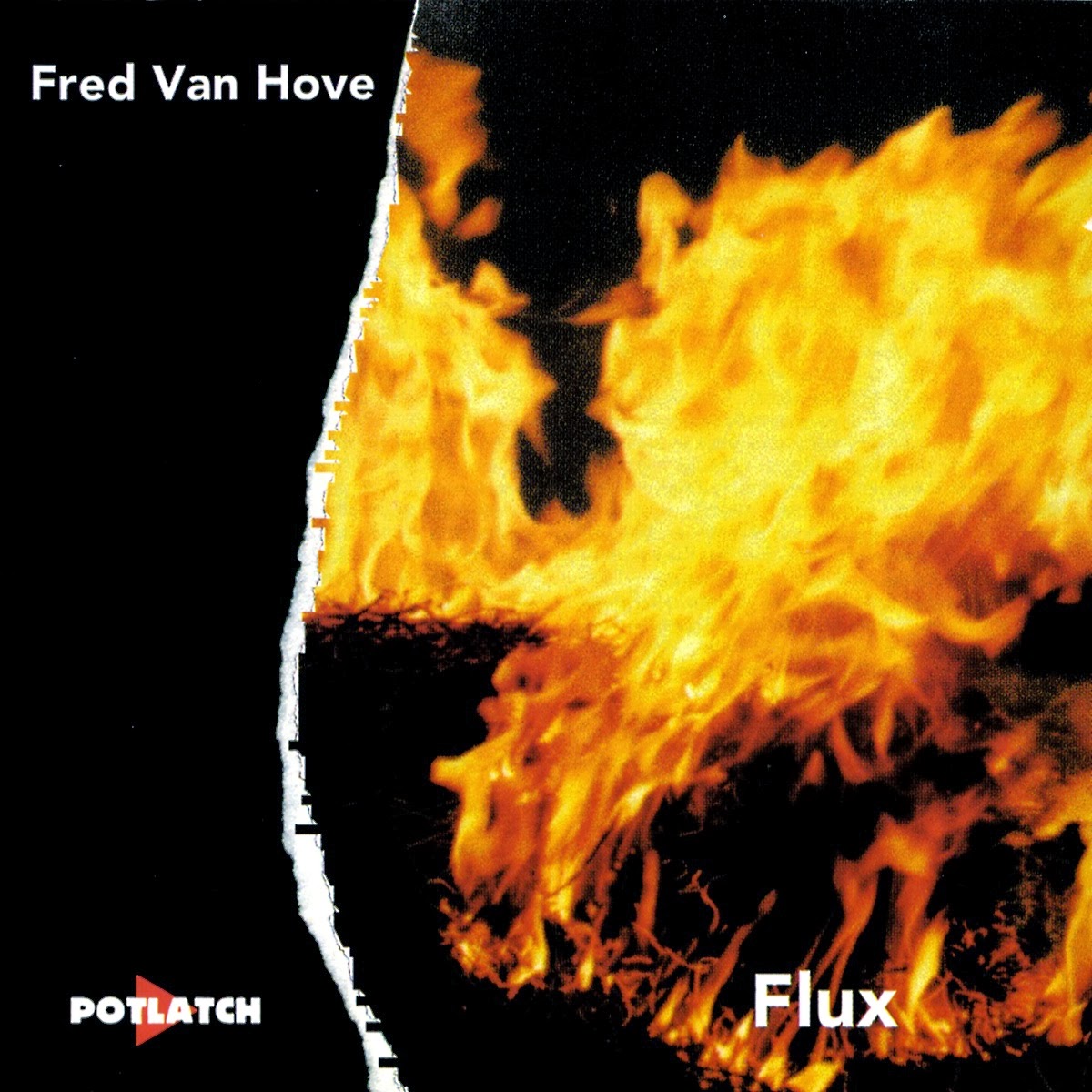
FRED VAN HOVE – Flux (piano solo) - [2CD-1998]


Label: Potlatch – P2398
Format: 2 × CD; Country: France - Released: 1998
Style: Free Improvisation
Recorded live in January 15 and 16, 1998, at Les Instants Chavirés.
Liner Notes – Gérard Rouy, John Corbett
Photography By – Fabio Pastorelli, Gérard Rouy
Piano, Music By – Fred Van Hove
Recorded By – Jean-Marc Foussat

Recorded live in January 1998 at Les Instants Charires Montreuil, France, Van Hove performs two pieces of 52 and 43 minutes length. His ceaseless creative pounding lines, working right hand runs while his left hammers, are both acts of endurance and one of a fertile imagination. His musical thoughts develop from his physical movements, like Jackson Pollock painting in the airspace above his canvas laid out on the floor. Like Pollock, Van Hove's thoughts are anything but random drippings. He passes intensity on, builds to a climax, releases tension with gentler cycles and opens the piano for some dulcimer sounds and wood thumping. The music heard is easy to relate to on several levels. Physically, the workout is impressive, emotionally or spiritually, his playing pulls you into the action before leaving you with a cathartic sigh, and intellectually (and maybe socially) you grasp the commitment he has to creative music. A satisfying and exhausting experience.


John Corbett's sleeve notes claim an analogy between solo improvisation and shadow-boxing. That's as may be, but Van Hove feels very much like he's landing every heavyweight punch he throws on these two marathon outings. Frequently occupying the bass register with his high-impact, staccato ostinati, his music can often be bludgeoningly loud and irritably angular.

Yet that's only half the story. If Van Hove can pound you into submission, he can also find a sweet, rhythmically ambiguous place among the higher notes. His right hand seems to dance across the keys, so intense is the illusion of movement in his playing, yet there's no hint of gestural sketchiness. Like Crispell, who he can quite strongly resemble at times, he has an ability to weld rhythmic and melodic shapes to logical harmonies. This can sometimes give his playing the air of Messiaen's more complex solo keyboard works.

It also completely side-steps the Cecil Taylorisms to which many avant garde pianists are prone. For all his whizz-bang technical fireworks, Van Hove's connections with Taylor are not his high-definition runs or the occasional cluster, but the impression that, at the centre of the whirlwind, careful thought is being put into the form of the piece and the development of its ideas.

Van Hove's playing may be closer to Modernism than to anything else, but there's a strong jazz connection here too. In particular, his left-hand strategies are often of the bass-line variety, while a hint of boogie woogie even surfaces now and again. His right hand can sometimes recall the great rock 'n' roll players, while a rhythmical reference to ragtime can occasionally be discerned within the tempestuous world he creates.

There's not much to separate these two long pieces -- each follows a similar path in its own fashion. Each has a ferocity which is all the more intimidating for its being so apparently casual, and each proceeds by generating and then transforming fairly simple materials, creating an organic flow of music with a surface which bristles with detail. One is reminded of Salieri in Schaeffer's Amadeus: if there really are only so many notes one can listen to in one evening, the audience at Les Instants Chavires must have gone home with hemi-demi- semiquavers dropping out of their ears. Like Mozart, though (and there's a comparison Van Hove can't have had too often), his superficial complexity compliments a formal elegance.

This double CD represents a technical, creative and athletic tour de force. Those who thrive on this level of intensity will find their ears very pleasingly crammed. It's also worth noting that, for a live document of such astonishingly loud music, the recording is very clear and not at all muddy. Highly Recommended.

_ By RICHARD COCHRANE


Links in Comments!
 

Tuesday, December 31, 2013

SLAMFEST 1999 - Live At The Premises, London - (2CD-2000)


Label: Slam Productions – SLAMCD 405
Format: 2 × CD, Album; Country: UK - Released: 2000
Style: Free Jazz, Contemporary Jazz, Free Improvisation
Recorded live at the Premises, London, England, 10 and 11 July 1999.
Design, Producer – George Haslam
Recorded By, Edited By, Mastered By – Dill Katz

This first SLAM CD release for 2000 is a live recording of the two nights of music played at The Premises, London, July 1999 to celebrate the tenth year of SLAM CDs. The line up presents an impressive array of musicians prominent on the British improvising scene - most of which have appeared on previous SLAM releases. The recording is another example of the impressive abilities of soundman Dill Katz. The music by five different groups fills two CDs; the double CD package is offered at the same price as a SLAM single CD.

ARTISTS: Brian Abrahams, Roberto Bellatalla, Jeremy Brown, Lol Coxhill, Gary Curson, Elton Dean, Jim Dvorak, Nick Evans, George Haslam, Jim LeBaigue, Phil Minton, Liam Noble, Howard Riley, Paul Rutherford, Harrison Smith, Keith Tippett.


The artists who participate on this two-CD set, recorded live at the Premises, London July 10 and 11, 1999, read like a who's who of British modern jazz/improvising superstars. Here, legendary saxophonists Elton Dean and Lol Coxhill, trombonist Paul Rutherford, pianist Keith Tippett, vocalist Phil Minton, and others of note perform within various aggregations or subgroups on this rather multifarious affair. Basically, these performances should whet one's musical appetite, whether they are Tippett's sweeping arpeggios and fervent right-hand leads on the piece titled "Careful Driver," or Coxhill, Rutherford, and baritone saxophonist George Haslam's frisky interplay and converging statements on the 19-minute work "CHAR I." Other highlights include: a spirited duet, marked by counterbalancing themes between pianist Howard Riley and alto saxophonist Elton Dean, while "Tuna Up" features trumpeter Jim Dvorak and Phil Minton embarking upon an often humorous journey, thanks in part to Minton's frantic, scat-like vocalise and the twosome's altogether enticing exchanges. Ultimately, there's quite a bit to digest here, as the musicians toggle between modern jazz- style interplay and cunning improvisational tactics, atop richly thematic lyricism and blues- drenched choruses.

_  Review by GLENN ASTARITA


Links in Comments!

Saturday, December 28, 2013

TERUMASA HINO – Taro's Mood (1973) [Recorded live at the Domicile] - Re-2006


Label: Enja Records – ENJ 2104 2
Series: Enja · 24bit Master Edition –
Format: 2 × CD, Album, Remastered, Digipack; Country: Germany - Released: 2006
Style: Hard Bop, Free Improvisation
Recorded live at the jazzclub Domicile in Münich, June 29th 1973
Design – David Winckelmann
Photography By – Josef Werkmeister, Mathias Rissi
Producer – Matthias Winckelmann
Recorded By – Jürgen Koppers
Remastered At – Organic Music Studio, By – Thorsten Scheffner

Recorded in 1973. Remastered from analog source. 1 bonus track plus 1 bonus CD (tracks 5- 7)

Born in 1942 in Tokyo, Terumasa Hino made his professional debut in 1955. After the great success of his album "Hi-nology" (1969) he performed at the Berliner Jazztage in 1971 and at many other festivals before moving to New York in 1975. Today Hino is a lving legend and the most famous national jazz musician in Japan. Once an editor of Miles Davis transcriptions, his powerful playing in the 70s and his "large, brilliant tone" (Grove Dictionary) have often been compared to Miles Davis' 60s style. "Taro's Mood" is a fiery, high-energy live document of freestyle hardbop that also allows moments of surprising lyricism. Including four bonus tracks, this edition gives a much broader picture of Hino's music than the original LP vinyl could.

LP cover (1973)
Terumasa Hino

One of the first great non-Japanese recordings by trumpeter Terumasa Hino – a smoking little live set from Germany, done at a time when Hino was working at the height of his youthful powers! The mode here is stretched out and open – never too outside, but very exploratory – in the direction that Hino took quite strongly on his Japanese albums as the 70s approached, but performed here in a style that's even more organic than those records. The group is all Japanese – with Motohiko Hino on drums and Mikio Masuda on piano – and added conga at the bottom of the backings almost gives the record an early 70s Impulse Records sort of feel – nice and spiritual, and plenty soulful! Titles include "Alone Alone & Alone", "Taro's Mood", "Black Daffodil", and "Predawn". CD also features a bonus CD of unreleased material – the tracks "Stella By Starlight", "Cycle Circle", and "Lullaby".

Very beautiful recording.


Links in Comments!

Wednesday, December 25, 2013

KEITH TIPPETT and LOUIS MOHOLO – No Gossip (1982)


Label: FMP – SAJ-28
Format: Vinyl, LP; Country: Germany - Released: 1982
Style: Free Jazz, Free Improvisation
Recorded by Thomas Funk on March 20th & 23rd, 1980, during the Workshop Freie Musik at the Akademie der Künste in Berlin.
Music edited by – Harry Millerand and Jost Gebers
Produced by – Jost Gebers
Cover photographs and cover design by – Dagmar and Jost Gebers

"No Gossip"... An outstanding pairing of percussion and melody from the British pianist Tippett and South African drummer Moholo. What’s surprising is that Moholo provides much of the melodic material, while Tippett handles the beat. An intense record that demands attention.

This LP was originally released in 1982 (and recorded in 1980); it has never been on CD. The pair have continued to perform as No Gossip, most recently 2010 in London, on the occasion of Moholo’s 70th birthday. The last surviving member of the Blue Notes, Moholo is a towering figure of the music, a bridge that links South Africa to the European scene, and beyond. Tippett brings a huge imagination and aggressively heterodox approach to his instrument. Together, they form a timeless couple.


This is simply one of the best free improvisation jazz albums around. Tippett is a woefully overlooked pianist whose technical abilities and musical sensibilities are vast. Coupled with the energetic drummer Louis Moholo, these two have created a fiery, frenetic, but thoroughly captivating music. Rather than being simply a flurry of notes, this music is exciting, invigorating and demands attention. “ Black and White Unite ” is a nearly continuous onslaught of sound that leaves the listener drained, but blissfully so. “ Dedicated to Mandela, Biko, Sobukwe ” is a more varied work. Over Moholo’s perpetual motion drumming, Tippett works with a variety of textures and ideas, with passages that make reference to more conventional jazz, some lyrical and beautiful arpeggios, as well as some pull out all the stops jamming. Side two begins with the most extreme piece, which includes bird calls, guttural utterances, Tippett damping the strings with his hand inside the piano, and other unidentified sounds, not to mention some absolutely stunning playing by Tippett. Finally, “ All People…God’s People…Don’t Worry ” is a very interesting piece which finds Tippett exploring the lower, oft neglected, register of the piano. This is an album that must be heard.


...and
Happy Holidays to everyone.


Links in Comments!

Monday, December 23, 2013

KEES HAZEVOET QUARTET – Pleasure (1970) Re-2004


Label: Atavistic – UMS/ALP234CD
Series: Unheard Music Series –
Format: CD, Album, Reissue; Country: US - Released: 2004
Style: Free Jazz, Free Improvisation
Recorded on September 6, 1970 in the auditorium of Stedelijk Museum, Amsterdam
Design [Cover] – Fred R. Willemse
Engineer – Alwin Mulder
Photography By – Andries L. Hazevoet
Producer – Kees Hazevoet, Tony Schreuder
Reissue Producer, Liner Notes – John Corbett


It's no surprise that most free jazz fans haven't heard Pleasure. The 1970 debut from pianist/clarinetist Kees Hazevoet and his quartet was originally released in the Netherlands as a tiny edition of 250 copies replete with silk-screened covers. It may have been the first offering from Hazevoet under his own name, but by the time of Pleasure's release he was already deeply entrenched in the European free improvisation scene. On Pleasure he's joined by two fellow countrymen: alto saxophonist Kris Wanders and bassist Arjen Gorter, both of whom had been playing with Hazevoet as part of his working group. Joining them here is legendary South African drummer Louis Moholo, best known for his work with fellow South African ex-pat Chris McGregor and the Brotherhood of Breath. The album starts with "Moving Lady," with its humble bass intro soon joined by clarinet and alto for a melancholy melody that is quickly swept away by Moholo's stuttering toms and crashing cymbals. "What Happens" is a more tentative dialog that finds its foundation in Hazevoet's enigmatic piano riffs -- tiny patterns that swirl around the other players before fading away, only to return with heavy chord clusters. It's a brooding style that serves the quartet well, and while there are remarkable solos here, it's the group interaction that makes Pleasure stand out. "All There," the 20-minute album closer, is centered on the spiraling interplay between Hazevoet on piano and Wanders on sax. Toward the end of the piece, Hazevoet switches to clarinet for a frantic mantra that drives Wanders' alto to higher heights before easing the proceedings back to a reverent earthbound finish. This is the second Hazevoet date to be reissued by Atavistic (the first was the excellent Unlawful Noise by Haazz & Company) and a third, Calling Down the Flevo Spirit with Han Bennink, is already planned. Hazevoet may not have the name recognition of his Dutch peers, largely due to his retirement from music just as the Netherlands scene was getting some of its due, but Pleasure's reappearance after such a lengthy stay in obscurity proves that you can't keep a good record down. Here's to more albums like Pleasure and players like Kees Hazevoet getting the attention they deserve.

_ Review by WADE KERGAN


Links in Comments!

Sunday, December 22, 2013

PAUL DUNMALL with JOHN EDWARDS with JOHN BUTCHER – Hit And Run (2001)


Label: FMP – FMP CD 116
Format: CD, Album Country: Germany - Released: 2001
Style: Free Improvisation, Free Jazz
Recorded during the "Total Music Meeting" on November 5th and 6th, 1999 at the "Podewil" in Berlin
Design, Layout, Photography By – Dagmar Gebers
Liner Notes – Steve Lake
Liner Notes [Translation] – Caroline Lake
Mixed By, Mastered By – Jonas Bergler
Producer – Jost Gebers
Recorded By – Holger Scheuermann, Jonas Bergler


There are two – really three – distinct groups represented here. The first track, taking up more than thirty-five minutes, is an invigorating duo between Paul Dunmall and John Edwards. Evidently, Dunmall was scheduled to perform with bassist Paul Rogers, who was ill at the last moment, and Edwards took his place. The second is a powerful duo between John Butcher and Edwards, lasting just a tad longer, and the final short track features all three musicians. You might consider this is a welcome opportunity to compare Dunmall and Butcher close up, but their styles are so different that that is not really the point at all. All three tracks have their high points, and stand alone as significant pieces of music. It is unclear why the recording is listed under Dunmall ’ s name “ with ” Edwards and Butcher, since Edwards plays his heart out (even if he is a replacement), and is the only player found on all three tracks, and since the two saxophonists would seem to be equal participants. The Dunmall duo is important for his bagpipe work, which if you have never heard it before, is revelatory. It boasts at least as broad a range as the soprano or tenor, and allows the player to perform separate notes simultaneously, giving the impression of a trio or quartet. It has elements of the keyboard, too, in its fingering. Dunmall is the dominant figure on “ Gaulstones ” , in which he performs ecstatically, producing some of the best free bagpipe work on record – a long way from Rufus Harley. Edwards gets plenty of solo space, during and after which Dunmall switches to soprano. There are outstanding interactions, quick changes in tempo and, at least on soprano, some attractively mellifluous sections. “ Rhymes ” , the piece in which Butcher performs with Edwards, is divided into four distinct sections, which add a dash of diversity. The set with Butcher does not break any new ground, but as with so many of his performances, it offers glimpses of new sounds and directions. While Dunmall relies on over-blowing as an important technique on bagpipes, Butcher focuses more on a range of advanced techniques, including split tones, multi-phonics, flutter tonguing, and others to create a palette of sound. You might call Dunmall ’ s approach the macro-sound, as opposed to the micro-sounds of Butcher – but that is probably too great to generalization as each incorporates varied complexities and overlapping strategies. The promising though short closing piece, “ Hit and Run ” , in which Butcher, Edwards, and Dunmall improvise simultaneously, almost lives up to expectations. Its only downside is its short length, and its somewhat abrupt ending, leaving the listener wishing for more, and hoping for a follow-up performance and recording.
Recommended.

_ By STEVEN LOEWY
Cadence Magazine # 6, June, 2002


Links in Comments!

Thursday, December 19, 2013

ELTON DEAN – QED (2000)


Label: Blueprint (Voiceprint) – BP339CD
Format: CD, Album Country: UK - Released: 2000
Style: Free Jazz, Free Improvisation
Tracks 1, 2, 4, 7 recorded 20.01.00 at Eddie Mander's studio in Stoke Newington, London 
Tracks 3, 5, 6 recorded 17/18/21.01.00 at the Red Rose Club, as part of the 'Wireless' Festival
Artwork by – John Gardiner (Abstract Flight')
Design by – L-Space Design
Mastered by – Dave Bernez

QED features saxophonist Elton Dean in various contexts, from a duet with bassist Paul Rogers to trios, quartets, and a quintet with Jim Dvorak (trumpet), Nick Evans (trombone), Rogers, and Mark Sanders (drums). Other players include Alex Maguire (Hammond organ and piano), Tony Bianco (drums), Paul Dunmall (tenor sax), Simon Picard (tenor sax), and Robert Bellatalla (bass). The seven improvisations were recorded during one studio session and three live dates, all in January 2000. Even though collaborators and configurations change from one track to the next, this set forms a more cohesive (and interesting) whole than Moorsong, another Dean hodgepodge released around the same time on Cuneiform. These are all free improvisations with jazz roots. Highlights include the opening and closing numbers, two energy-filled trios with Maguire and Bianco on which Dean also plays electric piano (a wink to his Soft Machine days?). Bianco's Rashied Ali-inspired drumming and Maguire's funky Hammond playing turn these two tunes into exciting free-form fusion numbers. The horribly titled "Sax.com" is a nice sax quartet with Dean, Dunmall, Picard, and Jason Yarde. It makes a great contrast with "Sheepdogs," the aforementioned duet, where Dean reminds us how soulful his playing can be. The longest track is the quintet improv, "Deep Crease," the most textural of all. QED is a healthy dose of Elton Dean and a release his fans will not want to pass on.

_ by François COUTURE


Elton Dean’s recent associations with Hammond organ specialist Alex Maguire (as heard on HUX’s excellent release Psychic Warrior) have been gradually building over time. QED is one of the first recording dates with Maguire and drummer Tony Bianco that capture a return of sorts to the inspired signpost of Dean’s Soft Machine days. This trio gets two cuts on the recording: the first song, “ Hammond X ” is informed by the ghost of Tony Williams Lifetime as Dean spends time on Fender Rhodes against Maguire’s pensive but effective tones. The trio’s other piece ends the disc, “ New Roads ” which is perhaps a bit more into Brian Auger territory but the trio are playing at breakneck speed to end the recording on a substantial high note. Maguire is retained on piano for two freer excursions with Roberto Bellatalla and Mark Sanders handling the rhythm duties. Their first performance, “ Quartered, ” is a loosely structured piece with Maguire comping against Sander ’ s loose tempo and Bellatalla’s adept anchoring. The latter piece, “ Altored Saint, ” is a saner improvisation with Dean and Maguire introducing an intuitive dialog before the upright bass enters with a few careful brush strokes on the snare. On “ Sax.com ” Dean is joined by three fellow sax men (Paul Dunmall, Simon Picard and Jason Yarde) for a somber English take on San Francisco’s Rova sax quartet. Jim Dvorak and Nick Evans join Dean and Sanders on the longest improv, “ Deep Crease, ” which is the definitive performance on the disc. In summary Dean has rarely delivered anything but high quality collaborations between various configurations across the years.

_ By JEFF MELTON, Published 2005-09-01


Links in Comments!