


Label:
Ogun – OG 410
Format:
Vinyl, LP / Country: UK / Released: 1977
Style:
Free Jazz, Contemporary Jazz, Free Improvisation
Recorded at the
Seven Dials, Shelton Street, London WC2 on 18 November 1976.
Artwork
By [Front Cover Painting] – John Christopherson
Engineer
– Keith Beal
Liner
Notes – Elton Dean
Mixed
By, Edited By – Elton Dean, Keith Beal
Photography
– Yuka
Producer
– Elton Dean, Keith Beal
Recorded
By – Ron Barron
A - Naima
..................................................................................
20:30
(Composed By – Coltrane)
B1
- Dede Bup Bup .......................................................................
8:50
(Composed By – Dean)
B2
- Nancy (With The Laughing Face) ......................................... 3:12
(Composed By – Van-Heusen, Silvers)
B3
– a) Easy Living .......................................................................
8:40
(Composed By – Robin, Rainger)
b) Overdoing It
(Composed By – Lawrence, Moholo)
c) Not Too Much
(Composed By – Dean, Tippett)
Elton
Dean – saxophone [saxello]
Keith
Tippett – piano
Chris
Lawrence – bass
Louis
Moholo – drums, percussion
Elton
Dean, period 1975/1978 was very tumultuous and resulted in a series of good
performances and albums for the label Ogun. This is one of them.
Elton
Dean was a totally unique musician : at times lyrical and moving, at others
explosive and unsettling, his approach of saxophone playing was totally his
own, besides the fact that he favoured a little-used member of the sax family :
the saxello, an hybrid between alto and soprano, with an instantly recognizable
sound. Over the years, Dean lent his immense talents to bands like Soft
Machine, Soft Heap, In Cahoots and L'Equip'Out, as well as many jazz ensembles
featuring Keith Tippett, Hugh Hopper, Pip Pyle, Mark Hewins and John Etheridge.


In
January 1975, Elton Dean launched his most ambitious project to date, the large
ensemble Ninesense, which included many of the British jazz scene's most
talented musicians, including Keith Tippett, Mark Charig, Nick Evans, Harry
Miller and Louis Moholo. He also formed his own quartet, EDQ, with Tippett,
Moholo and bassist Chris Laurence, recording They All Be On This Old Road
(1977) for Ogun Records; around the same time he also formed El Skid with
fellow saxophone player Alan Skidmore. In the autumn of 1975, he also joined
forces with Tippett, Jim Richardson (bass) and Pip Pyle (drums) as the
Weightwatchers, whose brief existence culminated in September 1976 with an epic
tour of the Netherlands, The following month, Dean and Tippett formed yet
another quartet, this time with Hugh Hopper and Joe Gallivan (drums and
synthesizer), which recorded the album Cruel But Fair for Compendium.
1977
was another busy year, with more Ninesense activities, a tour of France and
Germany with Tippett/Hopper/Gallivan, an album and European tour with Carla
Bley's band (alongside Hugh Hopper and Gary Windo), and a trio album with
Gallivan and Kenny Wheeler, The Cheque Is In The Mail. In 1978, he formed Soft
Heap with Pip Pyle, Hugh Hopper and Alan Gowen. An inaugural French tour with
Dave Sheen replacing Pyle resulted in the Soft Head album Rogue Element, and
later that year the band went in the studio to record its eponymous debut, with
Pyle back on the drum stool. Around the same time El Skid finally made its
recording debut...
HUGH HOPPER / ELTON DEAN
/ ALAN GOWEN / DAVE SHEEN – Rogue Element (LP-1978)
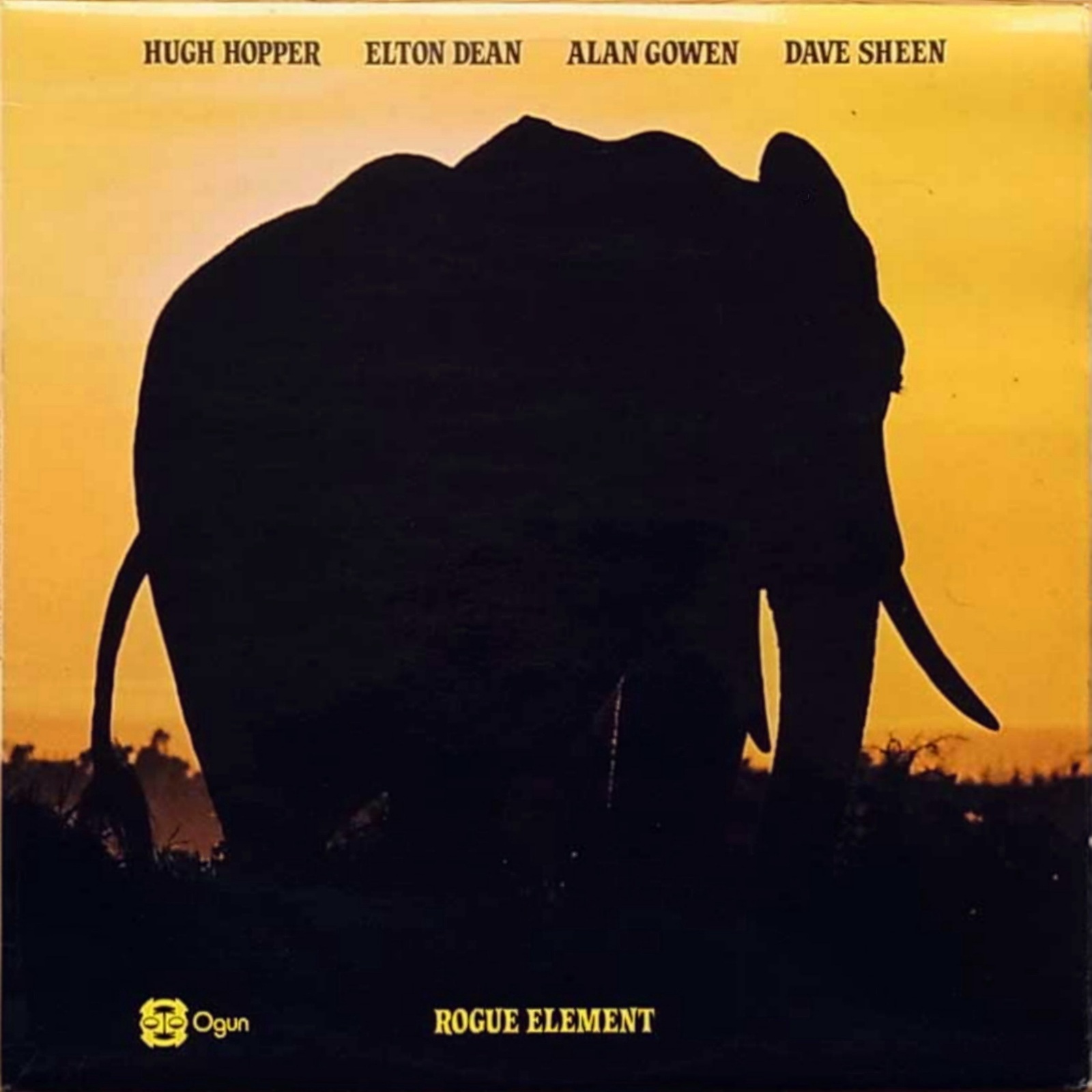


Label:
Ogun – OG 527
Format:
Vinyl, LP, Album / Country: UK / Released: 1978
Style:
Free Jazz, Jazz-Rock, Experimental
Recorded May 1978
at Chez Jacky "A L'Ouest de la Grosne" Bresse sur Grosne, on the Van
Acker Mobile.
Design
[Sleeve] – Liz Walton
Engineer
– Jean-Pierre Weiller, Pierre Richard
Mixed
By, Edited By – Keith Beal
Photography
By [Front Cover] – David Graham
Photography
By [Back Cover] – Jean-Pierre Duplan
Producer
– Ron Barron
Matrix
/ Runout (Side 1): OG 527 A C 2929
Matrix
/ Runout (Side 2): OG 527 B C 2929
A1
- Seven For Lee .....................................................................
8:40
(Written-By
– Dean)
A2
- Seven Drones
...................................................................... 4:20
(Written-By – Hopper)
A3
- Remain So
........................................................................... 5:05
(Written-By – Gowen)
B1
- C.R.R.C. .............................................................................
14:01
(Written-By – Gowen)
B2
- One Three Nine ...................................................................
6:17
(Written-By – Dean)
Hugh
Hopper – bass guitar
Elton
Dean – alto saxophone, saxello
Alan
Gowen – electric piano, synthesizer
Dave
Sheen – drums, percussion
_1 This band was
supposed to call themselves Soft Heap and include drummer Pip Pyle, but though
a tour was booked, he found himself otherwise engaged, and Dave Sheen was hired
to accompany fellow Canterbury scenesters Alan Gowen, Hugh Hopper, and Elton
Dean on a tour of Europe. Calling themselves Soft Head, they hoped to draw in
those frustrated fans of Soft Machine and Gilgamesh. And perhaps they did on
this night in France in 1978. But make no mistake, even though Hopper and Dean
are present here, this is no pure fusion date with a bunch of knotty harmonics
and angular changes riffing around all over the place. This is an electric jazz
date, period. Largely this is due to Gowen's compositions and arrangements that
walk a tense line between strictly composed elements and improvisation, and the
fire of the band themselves, who are -- on this night anyway -- inspired beyond
belief. Thank God somebody recorded it. Even at the risk of overstatement,
Elton Dean has never played like this on a record. His legato phrasing is
lightning-quick and moves through harmonic figures against Gowen's keyboards
like a knife cutting through butter. Counterpoint battles are pitched and waged
in these tracks, coming down to riding the steady yet flailing rhythm section
of Hopper's modally expansive bassing and the avant-swing of Sheen's drumming.
While everyone but Sheen contributes originals to the mix here, the arrangement
signature is all Gowen, even on Dean classics such as "Seven for Lee", or Hopper's signature "Seven Drones." The
spaces for movement between members are held tightly by Gowen, who underlies
everything with a chromaticism that is inclusive yet modally and dynamically
driven. This is killer stuff that makes one long for the good old days of
electric jazz that was still jazz.
_ (Review
by Thom Jurek)


_
2 This is a live album recorded in a
club in France in 1978. Alan Gowen, Hugh Hopper, Elton Dean and Dave Sheen make
up this band.The first three are all gone now sadly. It's hard to believe when
looking at the pictures of Alan Gowen in the liner notes that just three years
from this recording he died of cancer while still in his thirties. In the liner
notes it describes Alan as "a jazzer by nature, but his writing was
dominated by elaborate and expansive themes. His playing had litheness and
lightness which blurred what was scored and what was improvised. Running
parallel jaunts with Elton's bitter-sweet saxello, Alan could wail in a way
that stretched tonality to it's limit".
"Seven
For Lee" opens with bass as light drums join in then keys. Sax before a
minute. Great sound here. A calm arrives around 6 1/2 minutes then it builds
with bass and drums. Sax before 8 minutes then keys. "Seven Drones"
is a Hopper composition. Drums and dissonant keys lead the way as sax comes and
goes. Bass before 1 1/2 minutes as the sax starts to play over top. The sax and
keys become dissonant. Crazy stuff. It figures that this is a Hopper tune.
"Remain So" picks up quickly with piano but the tempo changes often
on this one. Bass takes over before 3 minutes. Sax is back late.
"C.R.R.C" is the long thing and takes whole 14 minutes. I like the
sound here as keys and sax lead while the bass and drums are also prominant.
The tempo picks up after 5 1/2 minutes. It calms right down a minute later with
piano, bass and drums. "One Three Nine" is a jazzy little number with
sax and keys leading. A bass solo after 5 1/2 minutes.
A
very important document really of these talented men playing live. The electric
piano, sax, bass and drums are played as only these men could play them.
_
(Review by Mellotron Storm)
Enjoy!
If
you find them, buy these albums!


