Showing posts with label Trevor Watts. Show all posts

Saturday, January 20, 2018

AMALGAM – Samanna (Vinyl Records – VS 104 / LP-1977)


Label: Vinyl Records – VS 104
Format: Vinyl, LP, Album / Country: Germany / Released: 1977
Style: Free Jazz, Jazz-Rock
Recorded at Riverside Studios, 26th January 1977.
Design [Cover Design] – John Fewster
Liner Notes – Trevor Watts
Engineer [Recording Engineer] – Adam Skeaping
Executive-Producer – Manfred Schiek
Producer – Trevor Watts
Matrix / Runout: (Side A Etched) A VS.104 A PF
Matrix / Runout: (Side B Etched) A VS.104 B PF

A1 - Samanna ................................................................................................... 20:47
A2 - Maas ........................................................................................................... 4:54
B1 - Unity .......................................................................................................... 14:44
B2 - Berlin Wall ................................................................................................... 6:50

Personnel:
Trevor Watts – alto Saxophone, percussion
Dave Cole – guitar
Colin McKenzie – bass (el. bass)
Pete Cowling – bass (el. bass)
Liam Genockey – drums, percussion

5th  album by the superb British Jazz / Improvised Music ensemble Amalgam, one of the precursors of British / European Free Jazz scene in the late 1960s and 1970s, founded by saxophonist Trevor Watts. On this album the lineup is a quintet, including guitarist Dave Cole, bassists Pete Cowling and Colin McKenzie and drummer Liam Genockey, which marks an extension of the quartet that recorded the previous album at beginning of the second phase of Amalgam, characterized by the dual saxophone – guitar frontline. The music is written entirely by Watts. This album was released on the tiny German independent Vinyl label, and was unavailable for many years. With the guitar and double electric bass the sound of the band becomes even more close to Fusion, but the extended improvisations and the virtuosity of the performers are still the same. This is still a classic and brilliant stuff as always!...


The opening sidelong title track is a wild fusion piece with some slightly dissonant passages, but the wild double bass-guitar attack is quite impressively funky (ala Stanley Clarke) and drives effortlessly the track throughout its 21-mins duration. Cole’s guitar shines occasionally (notably in the 2/3 to3/4 of the track. but mostly remains discrete, leaving clear the 8-lane freeway open to Watt’s wild sax meanderings.
Over the flipside, the 5-mins Mass features a cooler funky fusion, still double-bassed, where the both take turn in playing lead bass over a “simple” descending sax riff.
The B-side’s highlight is the almost 15-mins Unity, despite a slow start, where Watts lets it all hang out, but the double-bassed slowly and gradually clutch in the overdrive gear, letting Cole’s guitar get a wide chunk of funk in the mix as well. As the track climaxed around its 2/3, it slowly dies down to nought.
The 7-mins Berlin Wall closes the album in a pronounced dissonant sax spree, it is a raw, restless free-jazz sax wail over a punchy Prime Time undertow. Some of Watts' best work on record...   (Review by Sean Trane)


Well, Amalgam’s musical directions vary much from album to album, but Samanna is firmly entrenched in the funky jazz-fusion. Watts’ sax adventures are indeed still the driving force of the album, but here, the two bass-cylinder and Cole’s guitar unleash plenty of energy and power to the aural expansions...


If you find it, buy this album!

Saturday, November 16, 2013

BOBBY BRADFORD with JOHN STEVENS and the Sponteneous Music Ensemble – Volume 1 and Vol. 2 - 1971 (2LP-1980/'81)


Label: Nessa Records – N-17 and Nessa Records – N-18
Format: Vinyl, LP, Album Country: US - Released: Vol.1-1980  and Vol.2-1981
Style: Free Jazz
Recorded at Polydor Studios, London on July 9, 1971.
New Cover Design by ART&JAZZ Studio, by VITKO
Engineer – Carlos Olms
Photography By – David Redfern
Producer [Recording] – Alan Bates
Producer [Release] – Chuck Nessa

Note:
This is not a double CD reissued in 2009, this ripping is made directly from old vinyl records from 1980 / 81st. A few years ago, my four-year son, tore is the original packing, so I made a new cover and since then as a double LP, these two albums is situated in my collection of vinyl records.

Review:
In the instances that European and American improvisers have commingled and produced concerts and recordings, especially in the halcyon days of European free improvisation (the 1970s), a significant number of these situations resulted from expatriation. And it's certainly true that in many cases, American-born improvisers could have done better financially being based in Europe—after all, this music has a track record of greater appreciation across the pond, especially on the continent.

England was a bit stodgier in its cultural perception of the new music; perhaps that has had something to do with its vitality (both historic and current). In July 1971, trumpeter Bobby Bradford—a sometime associate of saxophonist Ornette Coleman who worked with clarinetist-composer John Carter in Los Angeles—visited the UK while on holiday. A brief visit, it resulted in contacts with writer Richard Williams, drummer John Stevens and Alan Bates' Freedom label. Long a family man, Bradford eschewed promises of more work in New York and overseas for a fruitful, if quieter, life in Southern California, where he is today.

The present set captures Bradford and Stevens' Spontaneous Music Ensemble (SME), recorded at Polydor studios. Alongside Stevens are regular conscripts, saxophonist Trevor Watts, bassist Yaron Herman and vocalist/guitarist Julie Tippetts; expatriate American trombonist Bob Norden also appears here. Though enough material was recorded for two albums, the complete version didn't appear until the early 1980s, when the tapes were purchased by Nessa Records (then based in Chicago). The 1970-1971 edition of the SME hasn't been significantly documented on record, so these albums with Bradford are doubly interesting.

At the time, Stevens was exploring structures that would allow people with a wide range of musical abilities to participate, such as "click pieces," "sustain pieces," and "rhythm pieces." Such work is represented on LPs like the self-titled SME Polydor LP (1969), Birds of a Feather (BYG, 1970), One Two Albert Ayler (Affinity, 1971) and For You to Share (A Records/Emanem, 1970). It was this edition of the SME that, in fact, kick-started the interests of Emanem Records founder Martin Davidson: "I came to terms with [free improvisation] in 1971. I had heard it starting in the mid-1960s, but could not relate to it. A 1971 concert by the Spontaneous Music Ensemble (with John Stevens, Trevor Watts, Julie Tippetts and Ron Herman) turned me on."

"Norway" and "Rhythm Piece," both on the second LP, exemplify some of the work that this edition of the SME was exploring. The way that the SME approached rhythm in this context had a lot to do with space and impulse. For the rhythm piece, Stevens is heard on a pared down kit, with brushes and knitting needles on snare, a small floor tom, hi-hat and ride cymbal. His approach is akin to Sunny Murray's work with saxophonist Albert Ayler, a constant active presence in free accent; he also uses his voice to elicit non-linear wailing lines. Stevens' playing is perhaps clearer and more detail-oriented than Murray's and is certainly less wave-driven. Herman sketches in pizzicato, his plucks and strums paralleling Stevens' constant movement and the wordless shouts, gasps, clicks and unbridled shrieks of Tippetts, who plays a muted acoustic guitar purely as off-kilter accompaniment. The horns are absent on "Rhythm Piece," allowing the delicate interaction between the three to remain front and center. "Norway" features long tones from voice, trumpet, trombone and soprano in a balladic form, somewhere between the Scottish Highlands and wide-vibrato Cleveland wail. Rattling bells and a single bass chord act as a platform, while tones fall in and out of phase with one another and elide into sharper dialogues.

But if one considers European free improvisation as a defined, emancipated structure free from the influence of American art, the SME would be a round peg in a square hole. An interest in the music of Ayler and Ornette Coleman was central to the aesthetic behind Stevens' work, and early incarnations of the group featured non-chordal, melodic improvisation and interaction that likewise stemmed from boppish themes. Titles like "2B Ornette," "Higgins," and the aforementioned "One, Two Albert Ayler" take a rightful place in the discography, as do "Ornette-ment" and "Trane Ride" represented here. Clearly the connection with free jazz's originators was one reason why the fruits sound so fresh.

Three of Bradford's compositions, plus a lengthy Stevens free suite. "His Majesty Louis" starts off the vinyl, free-time collective calls mated to a bluesy rondo not dissimilar to Coleman's "Congeniality." The Stevens-Herman rhythm section has clearly learned from listening to such bass/drums teams as Charlie Haden/Ed Blackwell, David Izenzon/Charles Moffett and Jimmy Garrison/Beaver Harris (the latter sets had visited the UK with Coleman and saxophonist Archie Shepp in the late 1960s). As the three-man front line is a field of commentary—incisive, vocal cries from Watts' alto, Norden's slushy tailgate and Bradford's cutting, stately horn—bass and drums ebb from loose, jovial swing to net-less freedom. Three minutes in, one might be hard pressed to think that the alto and rhythm are anything other than Ornette, Haden, and drummer Billy Higgins.

That isn't to say that the SME are derivative; rather, honoring forebears while at the same time taking free improvisation into new areas is an approach that Stevens' group so beautifully executes. Syrupy blues and back-alley hollers hark back to traditional modalities, while flitting rhythms and tart dissonance are distinctly modern. "Room 408" is more searing, its theme a series of planar rises, a collective improvisation driven by reedy brays and cutting brass, towards a sublimely immediate trio of bass, trombone and trumpet midway through.

"Bridget's Mother" is a piece for trumpet, alto and voice and is more closely-aligned with the SME works on the first LP, with Bradford's steely, fat lines and the liquid cries from Watts' alto triangulating toward Tippetts' soaring cries and broad, impulsive leaps. Rhythmic motives are introduced but soon fall away to bubbling dialogues and long, seeking tones. As a vocal improviser, Tippetts is extraordinary, often in perfect unison with the alto and able to coax a saxophone-like vibrato from her throat.

Stevens, Watts and Bradford would work together again in 1973 on Love's Dream (Emanem, with Kent Carter on bass), the album a result of a tour that took the quartet through England, Holland, Belgium and France. Though a short-lived collaboration, clearly the resulting Stevens-Bradford music was something special for all involved.

_ By CLIFFORD ALLEN (AAJ)


Links in Comments!

Wednesday, July 10, 2013

AMALGAM (Trevor Watts) – Mad (LP-1977)


Label: Syntohn – VR 20.020
Format: Vinyl, LP; Country: Netherlands - Released: 1977
Style: Free Jazz, Jazz-Rock
Recorded live in 1977 and released without a cover.
All compositions PRS / MCPS
Producer By – Trevor Taylor
New Cover Designe by ART&JAZZ Studio Salvarica
Artwork and Complete Design by VITKO - 2013
Vinyl Rip

The original vinyl was realized without a cover, and I specifically for this occasion I made a suitable cover. I hope you like it.


Description:

Featuring Trevor Watts on saxes, Willem Kuhne on electric piano, Colin McKenzie on bass and Liam Genockey on drums. Recorded live in 1977. This is the fifth Amalgam album (Syntohn – VR 20.020) and each one has been a different and distinctive gem. Amalgam was saxist Trevor Watts' ever-evolving band both during and after he left the Spontaneous Music Ensemble. Amalgam had first an acoustic period with bassists Jeff Clyne or Barry Guy and guests like Keith Tippett. Their electric period featured the same rhythm team of Colin Mackenzie on electric bass and Liam Genockey on drums with different electric guitarists Dave Cole, Steve Layton and even Keith Rowe from AMM. 'Mad' seems to be the one Amalgam album with an electric piano, Willem Kuhne, replacing the electric guitar. When Trevor left SME, he moved more into the (cosmic) groove. Hence, the electric version of Amalgam always had a great groove in the center of whatever they did. Although you can tell that this vinyl from 1977, the sound is still just right. The rhythm team has a consistent, joyous, somewhat funky vibe which is both in-the-pocket and mutating at the same time. Trevor does a fabulous job of riding the groove and soloing with infectious glee on top. "Jive" is fast and furious tune that approaches that over-the-top fusion intensity level. With the rhythm team slamming hard, Trevor spins cascading lines of notes as if he is running a race or being pursued some monster about to swallow him whole. Mr. Kuhne also takes a smokin' solo, giving Trevor a run for his money, as does bassist Colin Mackenzie. . The second side of the album, consists of the two-part "Berlin Wall" and "Mad". On "Berlin Wall," Trevor almost sounds like a horse as he solos (whinnies) on top of another slower yet still celebratory groove. Drummer, Liam Genockey, was also a member of Trevor's next band, the Moire Music Society which included African musicians as well. Listening to this creative groove wonder, I can hear the connection between Amalgam and MMS. I dig the way the sax and piano are always interconnected, soloing and working their way around one another seamlessly. Amalgam is/are a powerful quartet that must've really been a joy to witness live, too bad we can't just jump into a time machine and check them out live. In the meantime, this vinyl will have to do.

_ By BRUCE LEE GALLANTER
http://www.downtownmusicgallery.com/Main/


Links in Comments!

Thursday, June 27, 2013

KEITH TIPPETT'S ARK – Frames: Music For An Imaginary Film (2LP-1978)


Label: Ogun – OGD 003 / 004
Format: 2 × Vinyl, LP, Album; Country: UK - Released: 1978
Style: Free Jazz, Fusion, Big Band, Jazz-Rock
Recorded 22, 23 & 24 May 1978 at Wessex Studios, London N5.
Design [Sleeve], Photography By – Dick Whitbread
Engineer – Gary Edwards
Engineer [Assistant] – Jeremy Spencer-Green
Executive-Producer – Keith Beal
Producer – Hugh Hopper
This music was commissioned by Ogun Publishing Co. and was first performed at The Roundhouse, London on 21 May 1978.
(Vinyl Rip)

Keith Tippett's Ark - Frames: Music For An Imaginary Film

Keith Tippett - Piano, Harmonium
Stan Tracey - Piano
Elton Dean - Alto Sax, Saxello
Trevor Watts - Tenor & Soprano Saxes, Alto Flute
Larry Stabbins - Tenor & Soprano Saxes, Flute
Mark Charig - Trumpet, Small Trumpet, Tenor Horn, Kenyan Thumb Piano
Henry Lowther - Trumpet
Dave Amis - Trombone
Nick Evans - Trombone
Maggie Nicols - Voice
Julie Tippett - Voice
Steve Levine - Violin
Rod Skeaping - Violin
Phil Waschmann - Electric Violin, Violin
Geoffry Wharton - Violin
Alexandra Robinson - Cello
Tim Kramer - Cello
Peter Kowald - Bass, Tuba
Harry Miller - Bass
Louis Moholo - Drums
Frank Perry - Percussion

Julie Tippett,  Keith Tippett, Maggie Nicols

Tracklist:

Side A
1 Frames Part One  (20:07)
Side B
2 Frames Part Two  (19:06)
Side C
3 Frames Part Three  (23:52)
Side D
4 Frames Part Four  (20:37)


Several years after his great success with the huge ensemble Centipede and its Septober Energy release, pianist Keith Tippett returned to the large-group format with his newly formed Ark. This band, a mere 22 strong, was less rock-influenced and arguably more "mature" musically, that is, quite capable of handling the diverse demands placed on it, which covered ground from richly arranged written portions to incisive free improvisation. One of the motifs tying this work (which is a single composition spread over four sides of the original LP) is the dual presence of vocalists Maggie Nicols and Julie Tippetts (the latter possessing one of the truly beautiful voices in avant-garde jazz), their twinned vocal lines serving as fine structures around which to erect woollier passages. Also as before, Tippett deploys small groups within the larger ensemble, for example a percussion duet that's soon joined by violin and soprano saxophone. These little "nuggets" within the orchestra provide a healthy degree of differentiation as well as connecting nodes between more fully massed sections. As such, "Frames" is essentially suite-like, with anthemic melodies like the one that begins side three abutting jagged, free lines that dissolve into group interplay standing alongside pulsing minimalist patterns. It's not really so much about the soloists, although there is much fine individual playing to be found, notably the leader's piano (and that of Stan Tracey), the alto work of Trevor Watts, and the bass playing of the late, great Harry Miller. Listeners who have enjoyed Barry Guy's London Jazz Composers Orchestra or Chris McGregor's Brotherhood of Breath will find themselves right at home here. Recommended.

_ By BRIAN OLEWNICK


Links in Comments!

Tuesday, April 30, 2013

BAILEY / STEVENS / WATTS – Dynamics Of The Impromptu - 1973/74 (1999)


Label: Entropy Stereo Recordings – ESR004
Format: CD, Album; Country: US - Released: 1999
Style: Free Improvisation
Recorded live at the Little Theatre Club, Garrick Yard. St. Martins Lane, London, in 1973/74.
Processed & premastered at Dynamic Audio Productions, Hastings, England.
Track 1 recorded 12/11/1973.
Tracks 2-3 recorded 18/12/1973.
Tracks 4-6 recorded 17/1/1974
Cover art by Mike Johnston. Photography by Jak Kilby (Traycard photo by Mike Johnston); Layout and design by Ben Bracken, Mike Johnston.
Executive Producer: Mike Khoury
Technician [Processed], Mastered By [Premastered] – Will Thompson


Imagine three scholars sitting under dim lights at a coffeehouse discussing world politics or social disorder? Dynamics of the Impromptu may imply such a scenario as three of the founding fathers of the British Free-Jazz movement coalesced at London ’ s “ Little Theater Club ” in 1973 and 1974. Dynamics of the Impromptu represents previously unreleased material which signifies a flourishing and historical time for this endearing and important era of free-improvised jazz.

Bailey, Stevens and Watts perform 6 improvised pieces titled “ Impromptu Dynamics 1-6 ” . Impromptu is an elegant word indicating spontaneity or in musical jargon — “ improvised ” . Here, the three masters immerse themselves in articulate dialogue through unconventional musical invention. Watts ’ spurious and at times briefly stated activities on soprano sax intersect Bailey ’ s uncanny, totally unique chord structures, harmonics and ingenious thematic approach. The late John Stevens, well known for his cutting edge Spontaneous Music Ensemble is a true clinician here and proves beyond a doubt that he was one of the early innovators or stylists within the British Free movement. Stevens, subtle and intricate patterns keep pace through suggestion or rhythmic intimation, which contrasts textbook style meter and tempo.

These pieces run the gamut from whispery low key musings through enraging or boisterous call and response. The moods constantly shift and evolve as Watts, Bailey and Stevens purvey musical structures that defy logic. Emotions flare up as in “ Impromptu Dynamics #6 ” . Arguments or debates are imminent. The sensibilities of unity and collaboration resurface as the music seems to transcend conventional ideology or acceptable agendas. Dynamics of the Impromptu provides a glistening snapshot of a thriving British music scene, which had initiated a campaign of renaissance spirit and anarchistic behavior enacted through music.

_ By GLENN ASTARITA, Published: May 1, 1999 (AAJ)


Links in Comments!

Monday, July 16, 2012

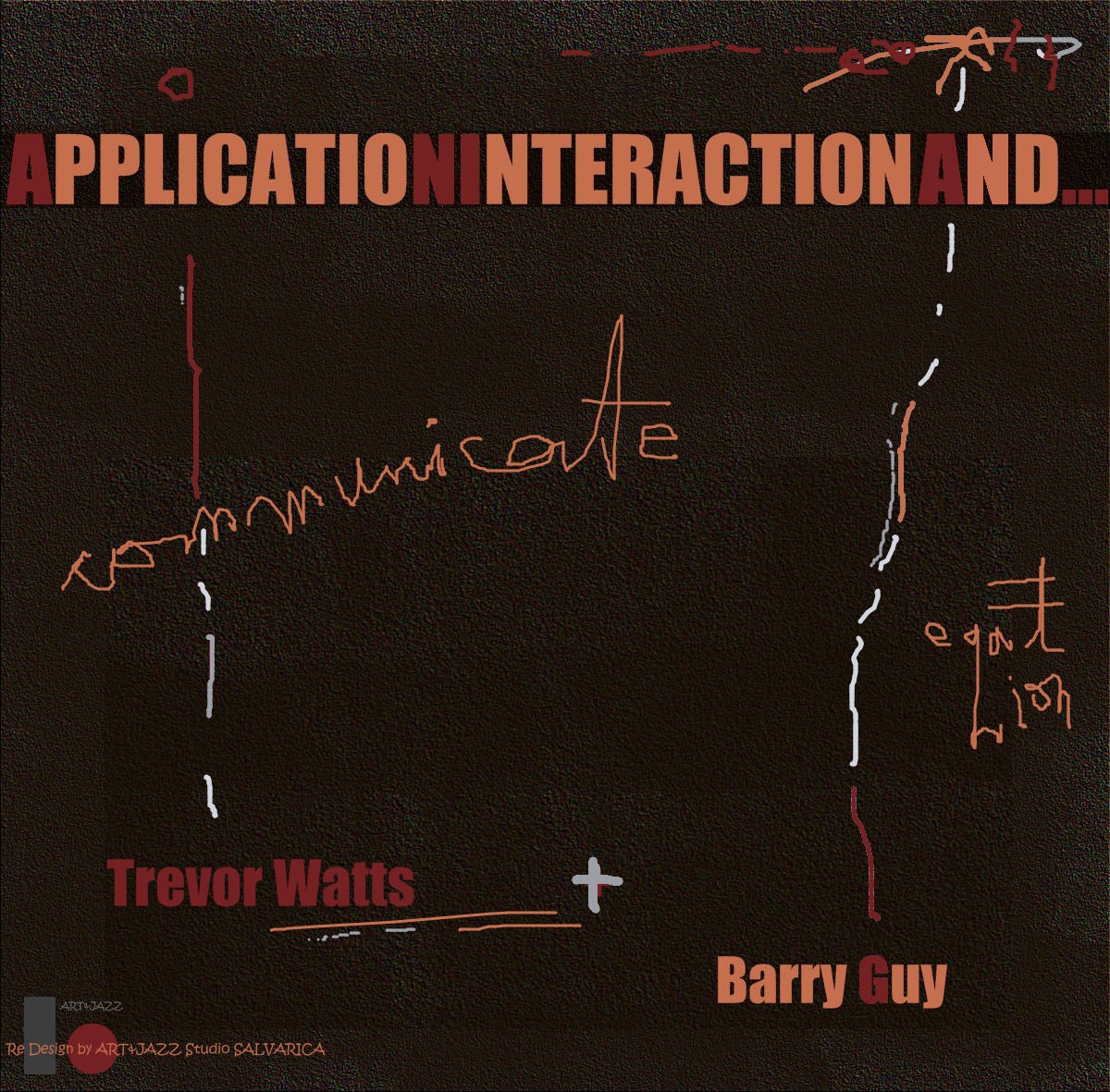
JOHN STEVENS – Application Interaction And... (1978/2002) [Repost]


Label: Hi 4 Head Records; Catalog#: HFHCD002; UK – 2002
Recorded on 31 August 1978 at Sound Suite Studios, London
Originally released on Spotlite Records
Style: avant-garde, free improvisation, Contemporary Jazz, Free Jazz
Music By [All Tracks] – Barry Guy, John Stevens (2), Trevor Watts; Photography By [Original Photographs] – Valerie Wilmer; Design – Malcolm Walker; RE-Design by ART&JAZZ Studio SALVARICA; Producer [Original Production] – Tony Williams; Reissue Producer – Nick Dart

The trio of drummer John Stevens, bassist Barry Guy and saxophonist Trevor Watts was one of Stevens ’ s hottest small groups and the two records they cut for Spotlite in the late 70s are Atlantic straddling classics that reconcile the emotive supernatural force of the late Albert Ayler with the exacting microdetail of the post SME set. Application Interaction And… was the second of these discs, the first, No Fear, having already been made available on CD by Hi 4 Head. At points the fidelity is pretty murky, with Stevens sounding like he ’ s playing his kit with boxing gloves and Guy ’ s bass almost overloading the speakers but all of that bottom end works as a delicious contrast to the upper register blasts that Watts peels from the ceiling. Guy is on inspired form and Watts ’ evocative, bluesy cries bring out the Charlie Haden in him, dropping yo-yoing notes right into the bell of Watts ’ s horn and plunging across register. The arco passage that caps the first piece sounds like more like a tiny rainbow of electronics than mere hairs on wire and Watts falls into step with a slow marching motif that feels more channelled than improvised. Stevens is better served by the second track, where his subtle time inversions and emphatic punctuation throw up countless phantom goalposts for Guy and Watts to make for. An excellent restoration of a great set.


Welcome to new prog-blog "Different Perspectives In My Room...!".
Enjoy the music, and please leave a comment. Thanks in advance.


Link in Comments!