Showing posts with label John Stevens. Show all posts

Wednesday, October 7, 2015

BOB DOWNES – Open Music (LP-1970)


Label: Philips – SBL 7922, 844 253 BY
Format: Vinyl, LP, Album / Country: UK / Released: 1970
Style: Free Jazz, Avant-Garde, Jazz-Rock
Recorded at PHILIPS studio, 1969, England.
Design [Sleeve] – Phil Duffy
Engineer – Roger T. Wake
Liner Notes – Richard Williams
Producer – Wendy Benka

A - Dream Journey ........................................................................................ 21:59
      (composed as the score to Ballet Rambert's "Blind Sight")
        baritone saxophone – John Warren
        flute – Jim Gregory
        performer [acetate paper] – Bob Downes
        tenor saxophone – Clive Stevens
        trombone – Chris Pine
        trumpet – Butch Hudson, Henry Lowther, Nigel Carter
        timpani, vibraphone, tam-tam [large], finger cymbals – Derek Hogg
        tam-tam – Dennis Smith
B1 - Birth Of A Forest ..................................................................................... 5:25
B2 - Integration .............................................................................................. 0:23
B3 - Contact ................................................................................................... 0:45
B4 - Ghosts In Space ..................................................................................... 8:14
B5 - Desert Haze ........................................................................................... 4:55
B6 - Electric City ............................................................................................. 6:28

Bob Downes – alto sax, flute [alto, bamboo], concert flute, tenor sax, 
                         saxophone [mouthpieces], bells [Chinese]
Chris Spedding – guitar
Harry Miller – bass, bass buitar
Dennis Smith – drums, percussion
John Stevens – drums, percussion

All the music was composed and arranged by Bob Downes.

Bob Downes and Ray Russell

Open Music was Bob Downes' debut album, recorded for the Philips label in 1969 (released 1970) and his impact on the UK scene was such that he was voted top place in the flute category of the Melody Maker jazz poll's British musician section for three consecutive years from 1972. This rare vinyl copies have attracted high sums in second-hand markets. Although Downes is best known for his flute playing, he is a genuine multi-instrumentalist, playing no fewer than seven instruments on this album, including the less conventional, acetate paper.

The recording's centerpiece is "Dream Journey." The piece — which received its premiere by Ballet Rambert on November 27, 1969 in London—runs just over twenty minutes. Divided into two parts, the first eleven minutes of the track are devoted to flute and percussion, with special emphasis on the sporadic, dramatic interspersions of timpani. The whole piece is very cinematic and reflects music of a more classical nature, but the second half is considerably more jazz informed. The ensemble sax sections are dynamically engaging, underpinned by acoustic bass and drums building to repeated crescendos with Downes providing an exciting flute solo.

The next five tracks are either solo flute, flute and drums, or flute, drums, and bass. These largely improvised tracks are predominantly quiet, ruminative pieces dominated by Downes' intricate flute. However, "Ghosts in Space" is more structured with a strangely hypnotic head defined by flute, arco bass, and drums, while the middle collective improvisation section is enlivened by Downes screaming in the noisier parts. The final track, "Electric City" which was to give its name to a succeeding album, recorded by Downes for Vertigo (1970), is effectively a jazz-rock piece. Again, Downes inserts some scat singing—or more accurately, shouting—all against a backdrop of ostinato bass guitar, Chris Spedding's unmistakable guitar work, and wild multi-tracked saxophones, all conjuring up an exciting mêlée of sound. This album surely explains Downes high-ranking in the Melody Maker polls. Open Music is an unusual and innovative collection of flute mastery.


Very rare LP UK pressing ORIGINAL PHILIPS / Stereo / SBL 7922 / 1970   
Matrix - Side 1:  844253 1Y/3 420  /  Side 2:  844253 2Y/3 420

Bob Downes was a well-known "studio rat" or a "session man" that played on many 60's records, from MANFRED MANN to ANDWELLA'S DREAM (and later on EGG); and his fantastic flute was second to JETHRO TULL's Ian Anderson only. By the turn of the decade, he had decided to try his own luck and 1970 was a particularly fruitful year for him: 2 full solo album and one collaboration. Released on the legendary Vertigo swirl label, Electric City was a strange album between avant-garde jazz and hard rock. The album failed to sell and by the time Bob Downes was ready to record his second album, Phillips had demoted him to their "normal" label (only GRACIOUS suffered the same treatment). Actually "Open Music" came out as his more successful release and has been a collector item for years, now.

The same year, Bob Downes also released a wild album called "Deep Down Heavy" (and its spectacular artwork) with poet Robert Cockburn reading out his text, making another unusual record.

None of the three albums sold enough for Downes to keep trying out his solo stint. Comes then a gap where I guess he returned to studio sessions for the next couple of years, most likely appearing on avant-garde jazz albums. This in turn led him to be noticed by some Modern Artistic Dance companies and in 72, he was commissioned for two "dance" project. Forming his own trio OPEN MUSIC, named after his more successful album, "Diversion" proved an interesting release where jazz-rock alternated with free form music, while the catastrophic "Episodes At 4AM" (74), which was a Welsh project, filled with obtuse free-form music. The following year saw Downes release "Hell's Angels", then later "Dawn Dreams", "South American Journey" and "Inside Stonehenge", before taking a long break.

Bob Downes moved to the continent in the late 80's and is now currently based in Germany, and continues to perform as a solo artiste, playing during the execution of paintings and art exhibitions running flute workshops and releasing the odd album now and then, such as 93's "Dreams of Nature".

_written by Hugues Chantraine


If you find it, buy this album!

Sunday, June 29, 2014

DETAIL - Johnny Dyani/Frode Gjerstad/ John Stevens – Backwards And Forwards - First Detail (1982-85)


Label: Impetus Records – IMP CD 18203
Format: CD, Album, Reissue; Country: UK - Released: 2000
Style: Free Jazz, Free Improvisation
Recorded at Staccato Studios, Stavanger, Norway on 11th October 1982
Track C previously unreleased, recorded in 1985, no other details.
Original cover artwork (front cover reproduced above) 1 2 NO 1 by John Stevens
Original LP design by Fay Stevens
Engeneer By – Kjell Arne Jensen

The free jazz group Detail, co-founded by Norwegian saxophonist Frode Gjerstad and British drummer John Stevens, was most often a trio. In the beginning the third member was Norwegian pianist Eivin One Pedersen. Pedersen left shortly after bassist Johnny Dyani joined. After Dyani's death in 1986, Kent Carter took over as bassist. Detail continued performing and recording until Stevens' death in 1994. The group's seven recordings were released on Impetus, Cadence, and Gjerstad's label, Circulasione Totale.


Frode Gjerstad is one of the few Norwegian musicians playing modern improvised music outside the 'ECM-school'. He has chosen to play with foreign musicians because there is no tradition in Norway for free improvised music.

His relationship with John Stevens which started in 1981 and lasted up until Stevens' death in 1994 was of great importance both musically as well as on a personal level. Through Stevens, he became acquainted with the playing of some of the finest British improvisers. His longstanding group with Stevens, 'Detail', started as a trio in 1981 with keyboardist Eivin One Pedersen, though Johnny Mbizo Dyani came in on bass in 1982 and Pedersen left later that year. The group played mainly as a trio until Dyani's death in 1986, though they did invite occasional guests to fill out the lineup; they undertook a tour of Britain in 1986 as a quartet with Bobby Bradford on cornet. Bradford did another tour with Detail with Paul Rogers on bass and then one with Kent Carter on bass; a quartet tour of Norway was organised with Billy Bang in 1989. The group then continued as a trio with Carter till 1994 when Stevens died.
_ By Joslyn Layne, Rovi


Impetus Records:
http://www.impetusdistribution.co.uk/css/pages.ID/imp.id.html


Buy this album!

Thursday, March 13, 2014

BOB DOWNES OPEN MUSIC – Crossing Borders (1978/79)


Label: Reel Recordings – RR 011
Format: CD, Album, Remastered; Country: Canada - Released: 2009
Style: Contemporary Jazz, Free Improvisation
Recorded at Riverside Studio, London 1978/79.
Composed By, Arranged By, Liner Notes – Bob Downes
Other [Sound Advice] – Miki Dandy
Photography By – Bob Downes, Jak Kilby
Producer [Produced In Canada By] – Michael King

01. Jungle Chase  (21:59)
02. South American Indian  (4:14)
03. Sad Senorita  (10:58)
04. Che Guevera  (11:00)
05. Basking In The Sun  (8:02)

BOB DOWNES : alto & tenor saxes/flute & Columbian pan flute/Bahian cowbells/vocalizing (1), solo bass flute/simultaneous vocalizing (2), alto saxophone (3), flute/vocalizing (4), flute (5)
BARRY GUY : bass (1,3,4)
DENIS SMITH : drums (1,5)
BRIAN GODDING : electric guitar (3,4,5)
MARK MEGGIDO : bass (3,4)
JOHN STEVENS : drums (3,4)
PAUL RUTHERFORD : trombone (5)
PAUL BRIDGE : bass (5)


Here's another of Reel's exercises in twentieth century tape archaeology. Like earlier efforts, it has the practical effect of sealing another hole in the documented fabric of British jazz and improvised music from the last four decades of that century. It's highly worthwhile too, this labor of love, as on this occasion it yields a program of music every bit as inventive as that produced by bigger stars—the term is as good as meaningless in the circumstances—of the day. Recorded at the end of the '70s, this music is both timeless and symbolic of moments in time when the players came together informally to tease the music from out of the ether.

Although primarily a flautist, it's the pieces that document Downes on alto or tenor sax that are the most compelling. His alto sound on "Sad Senorita" is significantly textural, and has an edge both grainy and acerbic. In the company of the underrated Brian Godding on guitar it does a dance at once lively yet downbeat in emulation of the title. Drummer John Stevens, in marked contrast to his work with the Spontaneous Music Ensemble, shows how propulsive he could be in a relatively more orthodox setting, while the basses of Barry Guy and Mark Meggido conspire never to get in each others' way, lending impetus to the music's open feel.

Downes plays both alto and tenor sax on the opening "Jungle Chase," in addition to flute and the Columbian pan flute he opens the piece on. His facility as a flautist is brought home. His rounded, full-bodied tone is never reduced to mere piping and the effect is that of a wholehearted improviser working the moment as though it's the most precious thing. The impression is reinforced when he switches to alto sax about nine minutes in, with Guy again on bass tracking developments.

Trombonist Paul Rutherford crops up on "Basking In The Sun," a piece which is the embodiment of propulsive atmosphere. Downes' flute is at its most lyrical and the music coalesces in a manner that soundtracks the activity of the title most effectively. Rutherford, at his most necessarily conventional, reminds us of how lovely his tone was. The relative brevity of the piece is fine in itself, an example of open music in the most rewarding sense of the term.

_ By NIC JONES, Published: May 3, 2009, AAJ


Buy this album!

Saturday, November 16, 2013

BOBBY BRADFORD with JOHN STEVENS and the Sponteneous Music Ensemble – Volume 1 and Vol. 2 - 1971 (2LP-1980/'81)


Label: Nessa Records – N-17 and Nessa Records – N-18
Format: Vinyl, LP, Album Country: US - Released: Vol.1-1980  and Vol.2-1981
Style: Free Jazz
Recorded at Polydor Studios, London on July 9, 1971.
New Cover Design by ART&JAZZ Studio, by VITKO
Engineer – Carlos Olms
Photography By – David Redfern
Producer [Recording] – Alan Bates
Producer [Release] – Chuck Nessa

Note:
This is not a double CD reissued in 2009, this ripping is made directly from old vinyl records from 1980 / 81st. A few years ago, my four-year son, tore is the original packing, so I made a new cover and since then as a double LP, these two albums is situated in my collection of vinyl records.

Review:
In the instances that European and American improvisers have commingled and produced concerts and recordings, especially in the halcyon days of European free improvisation (the 1970s), a significant number of these situations resulted from expatriation. And it's certainly true that in many cases, American-born improvisers could have done better financially being based in Europe—after all, this music has a track record of greater appreciation across the pond, especially on the continent.

England was a bit stodgier in its cultural perception of the new music; perhaps that has had something to do with its vitality (both historic and current). In July 1971, trumpeter Bobby Bradford—a sometime associate of saxophonist Ornette Coleman who worked with clarinetist-composer John Carter in Los Angeles—visited the UK while on holiday. A brief visit, it resulted in contacts with writer Richard Williams, drummer John Stevens and Alan Bates' Freedom label. Long a family man, Bradford eschewed promises of more work in New York and overseas for a fruitful, if quieter, life in Southern California, where he is today.

The present set captures Bradford and Stevens' Spontaneous Music Ensemble (SME), recorded at Polydor studios. Alongside Stevens are regular conscripts, saxophonist Trevor Watts, bassist Yaron Herman and vocalist/guitarist Julie Tippetts; expatriate American trombonist Bob Norden also appears here. Though enough material was recorded for two albums, the complete version didn't appear until the early 1980s, when the tapes were purchased by Nessa Records (then based in Chicago). The 1970-1971 edition of the SME hasn't been significantly documented on record, so these albums with Bradford are doubly interesting.

At the time, Stevens was exploring structures that would allow people with a wide range of musical abilities to participate, such as "click pieces," "sustain pieces," and "rhythm pieces." Such work is represented on LPs like the self-titled SME Polydor LP (1969), Birds of a Feather (BYG, 1970), One Two Albert Ayler (Affinity, 1971) and For You to Share (A Records/Emanem, 1970). It was this edition of the SME that, in fact, kick-started the interests of Emanem Records founder Martin Davidson: "I came to terms with [free improvisation] in 1971. I had heard it starting in the mid-1960s, but could not relate to it. A 1971 concert by the Spontaneous Music Ensemble (with John Stevens, Trevor Watts, Julie Tippetts and Ron Herman) turned me on."

"Norway" and "Rhythm Piece," both on the second LP, exemplify some of the work that this edition of the SME was exploring. The way that the SME approached rhythm in this context had a lot to do with space and impulse. For the rhythm piece, Stevens is heard on a pared down kit, with brushes and knitting needles on snare, a small floor tom, hi-hat and ride cymbal. His approach is akin to Sunny Murray's work with saxophonist Albert Ayler, a constant active presence in free accent; he also uses his voice to elicit non-linear wailing lines. Stevens' playing is perhaps clearer and more detail-oriented than Murray's and is certainly less wave-driven. Herman sketches in pizzicato, his plucks and strums paralleling Stevens' constant movement and the wordless shouts, gasps, clicks and unbridled shrieks of Tippetts, who plays a muted acoustic guitar purely as off-kilter accompaniment. The horns are absent on "Rhythm Piece," allowing the delicate interaction between the three to remain front and center. "Norway" features long tones from voice, trumpet, trombone and soprano in a balladic form, somewhere between the Scottish Highlands and wide-vibrato Cleveland wail. Rattling bells and a single bass chord act as a platform, while tones fall in and out of phase with one another and elide into sharper dialogues.

But if one considers European free improvisation as a defined, emancipated structure free from the influence of American art, the SME would be a round peg in a square hole. An interest in the music of Ayler and Ornette Coleman was central to the aesthetic behind Stevens' work, and early incarnations of the group featured non-chordal, melodic improvisation and interaction that likewise stemmed from boppish themes. Titles like "2B Ornette," "Higgins," and the aforementioned "One, Two Albert Ayler" take a rightful place in the discography, as do "Ornette-ment" and "Trane Ride" represented here. Clearly the connection with free jazz's originators was one reason why the fruits sound so fresh.

Three of Bradford's compositions, plus a lengthy Stevens free suite. "His Majesty Louis" starts off the vinyl, free-time collective calls mated to a bluesy rondo not dissimilar to Coleman's "Congeniality." The Stevens-Herman rhythm section has clearly learned from listening to such bass/drums teams as Charlie Haden/Ed Blackwell, David Izenzon/Charles Moffett and Jimmy Garrison/Beaver Harris (the latter sets had visited the UK with Coleman and saxophonist Archie Shepp in the late 1960s). As the three-man front line is a field of commentary—incisive, vocal cries from Watts' alto, Norden's slushy tailgate and Bradford's cutting, stately horn—bass and drums ebb from loose, jovial swing to net-less freedom. Three minutes in, one might be hard pressed to think that the alto and rhythm are anything other than Ornette, Haden, and drummer Billy Higgins.

That isn't to say that the SME are derivative; rather, honoring forebears while at the same time taking free improvisation into new areas is an approach that Stevens' group so beautifully executes. Syrupy blues and back-alley hollers hark back to traditional modalities, while flitting rhythms and tart dissonance are distinctly modern. "Room 408" is more searing, its theme a series of planar rises, a collective improvisation driven by reedy brays and cutting brass, towards a sublimely immediate trio of bass, trombone and trumpet midway through.

"Bridget's Mother" is a piece for trumpet, alto and voice and is more closely-aligned with the SME works on the first LP, with Bradford's steely, fat lines and the liquid cries from Watts' alto triangulating toward Tippetts' soaring cries and broad, impulsive leaps. Rhythmic motives are introduced but soon fall away to bubbling dialogues and long, seeking tones. As a vocal improviser, Tippetts is extraordinary, often in perfect unison with the alto and able to coax a saxophone-like vibrato from her throat.

Stevens, Watts and Bradford would work together again in 1973 on Love's Dream (Emanem, with Kent Carter on bass), the album a result of a tour that took the quartet through England, Holland, Belgium and France. Though a short-lived collaboration, clearly the resulting Stevens-Bradford music was something special for all involved.

_ By CLIFFORD ALLEN (AAJ)


Links in Comments!

Tuesday, April 30, 2013

BAILEY / STEVENS / WATTS – Dynamics Of The Impromptu - 1973/74 (1999)


Label: Entropy Stereo Recordings – ESR004
Format: CD, Album; Country: US - Released: 1999
Style: Free Improvisation
Recorded live at the Little Theatre Club, Garrick Yard. St. Martins Lane, London, in 1973/74.
Processed & premastered at Dynamic Audio Productions, Hastings, England.
Track 1 recorded 12/11/1973.
Tracks 2-3 recorded 18/12/1973.
Tracks 4-6 recorded 17/1/1974
Cover art by Mike Johnston. Photography by Jak Kilby (Traycard photo by Mike Johnston); Layout and design by Ben Bracken, Mike Johnston.
Executive Producer: Mike Khoury
Technician [Processed], Mastered By [Premastered] – Will Thompson


Imagine three scholars sitting under dim lights at a coffeehouse discussing world politics or social disorder? Dynamics of the Impromptu may imply such a scenario as three of the founding fathers of the British Free-Jazz movement coalesced at London ’ s “ Little Theater Club ” in 1973 and 1974. Dynamics of the Impromptu represents previously unreleased material which signifies a flourishing and historical time for this endearing and important era of free-improvised jazz.

Bailey, Stevens and Watts perform 6 improvised pieces titled “ Impromptu Dynamics 1-6 ” . Impromptu is an elegant word indicating spontaneity or in musical jargon — “ improvised ” . Here, the three masters immerse themselves in articulate dialogue through unconventional musical invention. Watts ’ spurious and at times briefly stated activities on soprano sax intersect Bailey ’ s uncanny, totally unique chord structures, harmonics and ingenious thematic approach. The late John Stevens, well known for his cutting edge Spontaneous Music Ensemble is a true clinician here and proves beyond a doubt that he was one of the early innovators or stylists within the British Free movement. Stevens, subtle and intricate patterns keep pace through suggestion or rhythmic intimation, which contrasts textbook style meter and tempo.

These pieces run the gamut from whispery low key musings through enraging or boisterous call and response. The moods constantly shift and evolve as Watts, Bailey and Stevens purvey musical structures that defy logic. Emotions flare up as in “ Impromptu Dynamics #6 ” . Arguments or debates are imminent. The sensibilities of unity and collaboration resurface as the music seems to transcend conventional ideology or acceptable agendas. Dynamics of the Impromptu provides a glistening snapshot of a thriving British music scene, which had initiated a campaign of renaissance spirit and anarchistic behavior enacted through music.

_ By GLENN ASTARITA, Published: May 1, 1999 (AAJ)


Links in Comments!

Monday, July 16, 2012

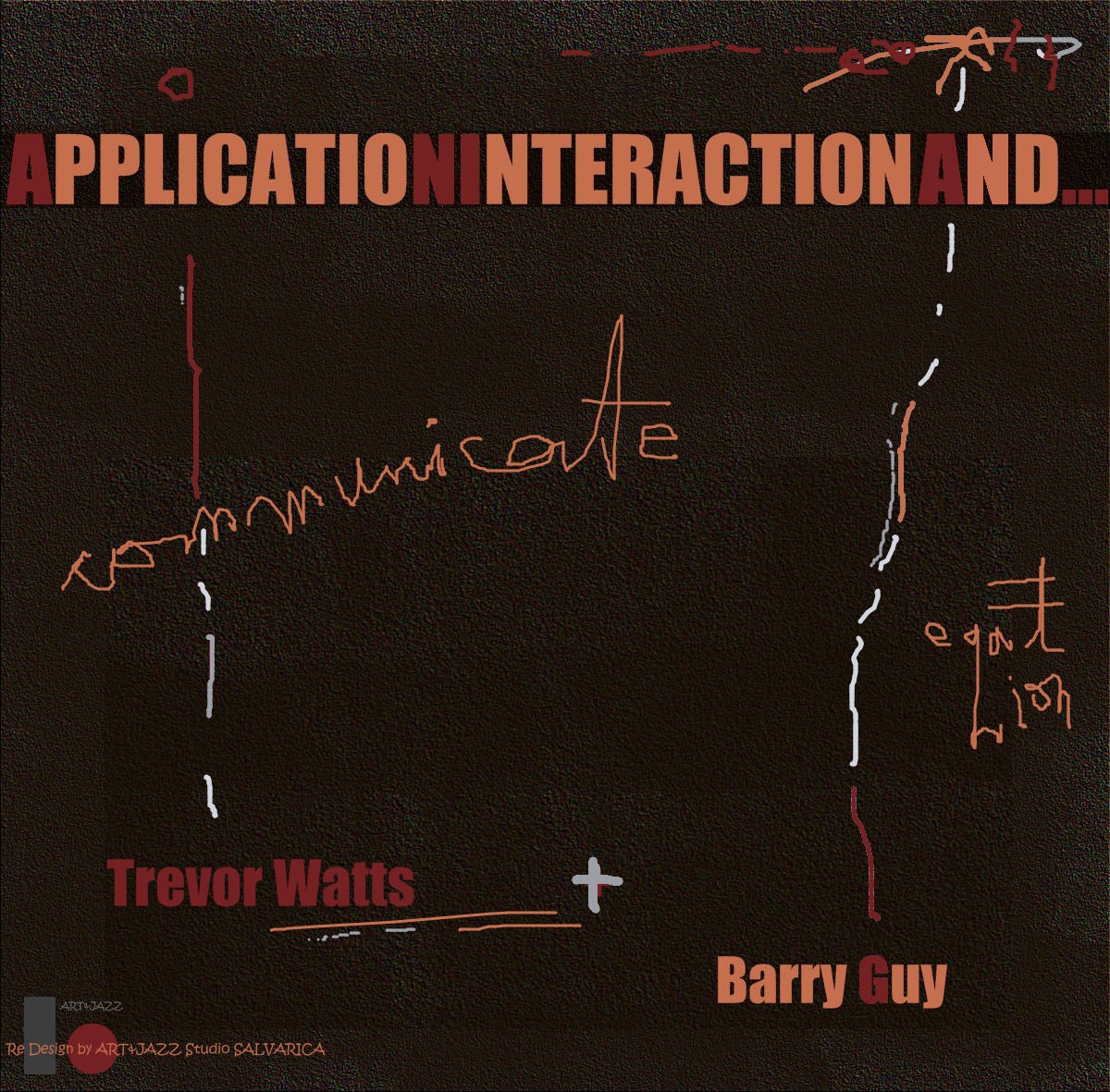
JOHN STEVENS – Application Interaction And... (1978/2002) [Repost]


Label: Hi 4 Head Records; Catalog#: HFHCD002; UK – 2002
Recorded on 31 August 1978 at Sound Suite Studios, London
Originally released on Spotlite Records
Style: avant-garde, free improvisation, Contemporary Jazz, Free Jazz
Music By [All Tracks] – Barry Guy, John Stevens (2), Trevor Watts; Photography By [Original Photographs] – Valerie Wilmer; Design – Malcolm Walker; RE-Design by ART&JAZZ Studio SALVARICA; Producer [Original Production] – Tony Williams; Reissue Producer – Nick Dart

The trio of drummer John Stevens, bassist Barry Guy and saxophonist Trevor Watts was one of Stevens ’ s hottest small groups and the two records they cut for Spotlite in the late 70s are Atlantic straddling classics that reconcile the emotive supernatural force of the late Albert Ayler with the exacting microdetail of the post SME set. Application Interaction And… was the second of these discs, the first, No Fear, having already been made available on CD by Hi 4 Head. At points the fidelity is pretty murky, with Stevens sounding like he ’ s playing his kit with boxing gloves and Guy ’ s bass almost overloading the speakers but all of that bottom end works as a delicious contrast to the upper register blasts that Watts peels from the ceiling. Guy is on inspired form and Watts ’ evocative, bluesy cries bring out the Charlie Haden in him, dropping yo-yoing notes right into the bell of Watts ’ s horn and plunging across register. The arco passage that caps the first piece sounds like more like a tiny rainbow of electronics than mere hairs on wire and Watts falls into step with a slow marching motif that feels more channelled than improvised. Stevens is better served by the second track, where his subtle time inversions and emphatic punctuation throw up countless phantom goalposts for Guy and Watts to make for. An excellent restoration of a great set.


Welcome to new prog-blog "Different Perspectives In My Room...!".
Enjoy the music, and please leave a comment. Thanks in advance.


Link in Comments!